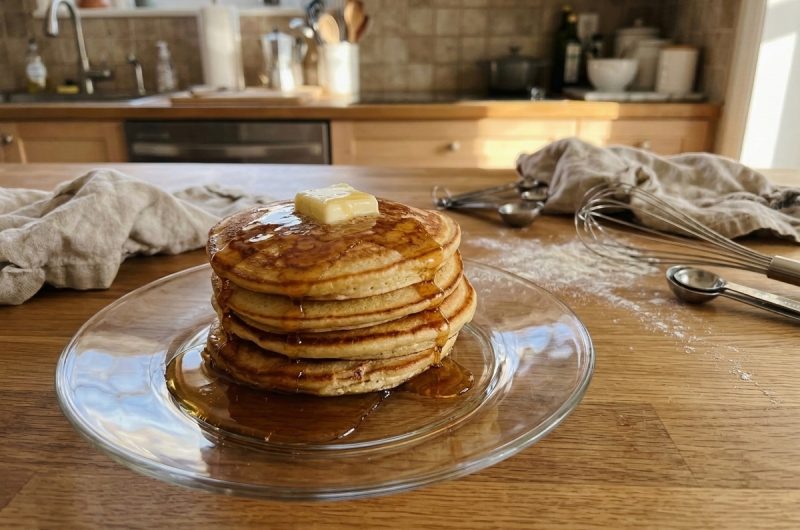

Homemade pancakes are a breakfast favorite for good reason. They are soft, fluffy, lightly golden on the outside, and easy to prepare with everyday kitchen ingredients. This easy pancake recipe brings together simple pantry staples to create a delicious breakfast in about 25 minutes. Whether you are cooking for a busy weekday morning or preparing a relaxed weekend brunch, these classic pancakes are a reliable choice for the whole family.
Making pancakes from scratch is easier than many people expect. You do not need a boxed pancake mix or special equipment to get great results. A mixing bowl, a whisk, a frying pan or griddle, and a few basic ingredients are enough to prepare a fresh batch. The batter comes together quickly, and the pancakes cook in just a few minutes, making this recipe practical for both beginner cooks and experienced home bakers.
One of the best things about homemade pancakes is how easily you can customize them. Serve them with butter and maple syrup for a traditional breakfast, or add fresh berries, sliced bananas, honey, or your favorite toppings. You can also prepare extra pancakes and freeze them for mornings when there is little time to cook. With a straightforward method and a soft, tender texture, this from-scratch pancake recipe deserves a regular place in your breakfast routine.
What Makes Homemade Pancakes Light and Fluffy?
The secret to fluffy pancakes is not complicated, but a few details make a noticeable difference. The right balance of wet and dry ingredients helps create a batter that spreads easily while retaining enough structure to rise during cooking. Baking powder provides lift, while the egg contributes structure and richness. Milk brings the ingredients together, and melted butter adds flavor while helping produce a tender texture.
Mixing the batter gently is especially important. When flour is mixed too much with liquid, gluten develops and can make pancakes chewy or tough. For this reason, stir the wet ingredients into the dry ingredients only until they are combined. A few small lumps are perfectly acceptable and are usually better than a completely smooth batter that has been overworked. This simple technique helps the finished pancakes stay soft instead of becoming dense.
Cooking temperature matters just as much as mixing. A skillet that is too hot can brown the outside before the center has finished cooking, while a pan that is not warm enough may produce pale pancakes that take too long to set. Medium-low heat gives the batter enough time to cook through while developing a golden surface. Watching for bubbles on top and slightly set edges will help you decide when to flip each pancake.
Ingredients for the Best Homemade Pancakes
All-Purpose Flour
All-purpose flour provides the main structure for classic homemade pancakes. It gives the batter enough strength to hold its shape while keeping the cooked pancakes tender. Measure the flour carefully to avoid adding too much, since excess flour can make the batter thick and the finished pancakes heavy. If you need a gluten-free option, a suitable one-to-one gluten-free flour blend can be used when it is designed for baking and pancakes.
Milk
Milk adds moisture and helps create a pourable batter. Regular 2% milk works well because it provides a balanced texture without making the pancakes overly rich. Buttermilk is another possible option when you want a slightly tangy flavor and a tender result. Different types of milk may change the consistency of the batter, so pay attention to how it pours and avoid adding extra liquid unless the mixture is unusually thick.
Eggs
Eggs help bind the ingredients and give pancakes their structure. When beaten well, the egg incorporates air that can contribute to a lighter texture. For an especially fluffy variation, separate the egg white from the yolk, mix the yolk into the wet ingredients, and whisk the white until foamy. Fold the beaten white gently into the finished batter just before cooking. This extra step takes a little longer but can create a softer, airier result.
Vanilla Extract
Vanilla extract gives homemade pancakes a pleasant aroma and a subtle sweetness that complements the other ingredients. Although pancakes do not need a strong flavoring to taste delicious, vanilla makes the finished stack feel more fragrant and inviting. It pairs particularly well with butter, maple syrup, fresh fruit, cinnamon, and other traditional breakfast toppings. Use the amount specified in the recipe rather than adding too much, which could overpower the delicate flavor of the pancakes.
Melted Butter
Melted butter adds richness and helps give pancakes a tender bite. Mixing melted butter into the wet ingredients allows it to distribute throughout the batter more evenly than adding cold, solid pieces. Butter is also useful for greasing the skillet, adding flavor to the outside of each pancake. Keep the cooking temperature moderate because butter can brown or burn when the pan becomes too hot, affecting both the taste and appearance of the finished breakfast.
Baking Powder, Sugar, and Salt
Baking powder helps the pancakes rise, giving them their characteristic fluffy texture. Sugar contributes a gentle sweetness and encourages the surfaces to brown during cooking, while salt balances the flavors and prevents the batter from tasting flat. These ingredients may seem minor, but each has a useful role in a dependable pancake recipe. For the best results, measure them accurately and distribute the dry ingredients evenly before adding the wet mixture.
How to Store Homemade Pancakes
Refrigerating Leftover Pancakes
Allow leftover pancakes to cool to room temperature before storing them. Place them in an airtight container or wrap them securely in foil, then refrigerate. Parchment paper between the pancakes helps prevent them from sticking together, making it easier to remove one serving at a time. For best quality, use refrigerated pancakes within three to four days. Although they may remain safe for longer under some conditions, their texture and flavor are generally best when eaten sooner.
Freezing Pancakes for Later
Freezing is a convenient way to keep extra pancakes ready for busy mornings. Let them cool completely, then arrange them in a single layer on a baking sheet and freeze until firm. Transfer the frozen pancakes to a freezer-safe bag or airtight container, placing parchment paper between them if stacking. Label the container with the date so you can keep track of storage time. For the best quality, use them within about two months.
You can also freeze the pancakes directly in a suitable container with parchment between each layer. The parchment prevents the pancakes from becoming one solid stack, which makes it easier to take out only the amount you need. Thaw frozen pancakes in the refrigerator overnight if you prefer, or reheat them straight from frozen. There is no need to prepare a new batch of batter whenever you want a quick homemade breakfast.
Reheating Pancakes
For a soft texture, place a pancake in the microwave and heat it for approximately 10 to 15 seconds, checking whether it is warm enough before adding more time. Frozen pancakes may need a few extra seconds, and multiple pancakes will take longer to heat. Microwave power varies, so use short intervals to avoid making the edges tough or rubbery.
If you prefer slightly crisp edges, use a toaster when the pancakes fit safely inside it. You can also warm them in a skillet over low heat, turning them as needed until heated through. Keep an eye on the surface so the pancakes do not become overly brown. Whatever reheating method you choose, make sure the pancakes are warmed evenly before serving with butter, syrup, or fresh fruit.
Frequently Asked Questions
Can I Make Pancake Batter Ahead of Time?
For the best texture, it is generally better to mix the batter shortly before cooking. The raising agent begins working after the wet and dry ingredients are combined, and extended storage can affect how well the pancakes rise. You can measure the dry ingredients in advance and keep them covered. When breakfast time arrives, combine them with the wet ingredients and cook the pancakes fresh.
Can I Use Buttermilk Instead of Regular Milk?
Buttermilk can be used as an alternative to regular milk, and it adds a mild tangy flavor. Because buttermilk differs in acidity and thickness, the batter may behave somewhat differently. Make the substitution carefully and check the consistency before cooking. If the mixture seems much thicker or thinner than expected, remember that unnecessary additions can change the texture, so adjust only when needed.
Can I Make Gluten-Free Pancakes?
Yes, a one-to-one gluten-free flour blend intended for baking can be used instead of all-purpose flour. Results depend on the blend, because different gluten-free flours absorb liquid differently. Follow the product’s guidance when available and allow the batter to rest briefly if needed. If you are cooking for someone with celiac disease, check all ingredients and use clean equipment to avoid cross-contact with gluten.
How Do I Know When Pancakes Are Cooked?
Look for bubbles on the surface, edges that begin to look set, and a golden-brown underside. After flipping, allow the second side to cook until the center is no longer wet or raw. Thick pancakes may require a little more time over lower heat. If the outside browns very quickly, reduce the heat so the middle has enough time to cook properly.
Can I Freeze Homemade Pancakes?
Yes. Let the pancakes cool completely, freeze them in a single layer until firm, and transfer them to a freezer-safe container or bag. Separate layers with parchment paper if necessary. Reheat individual portions in the microwave, toaster, or skillet. This method makes homemade pancakes a practical make-ahead breakfast that can be enjoyed without preparing fresh batter each time.
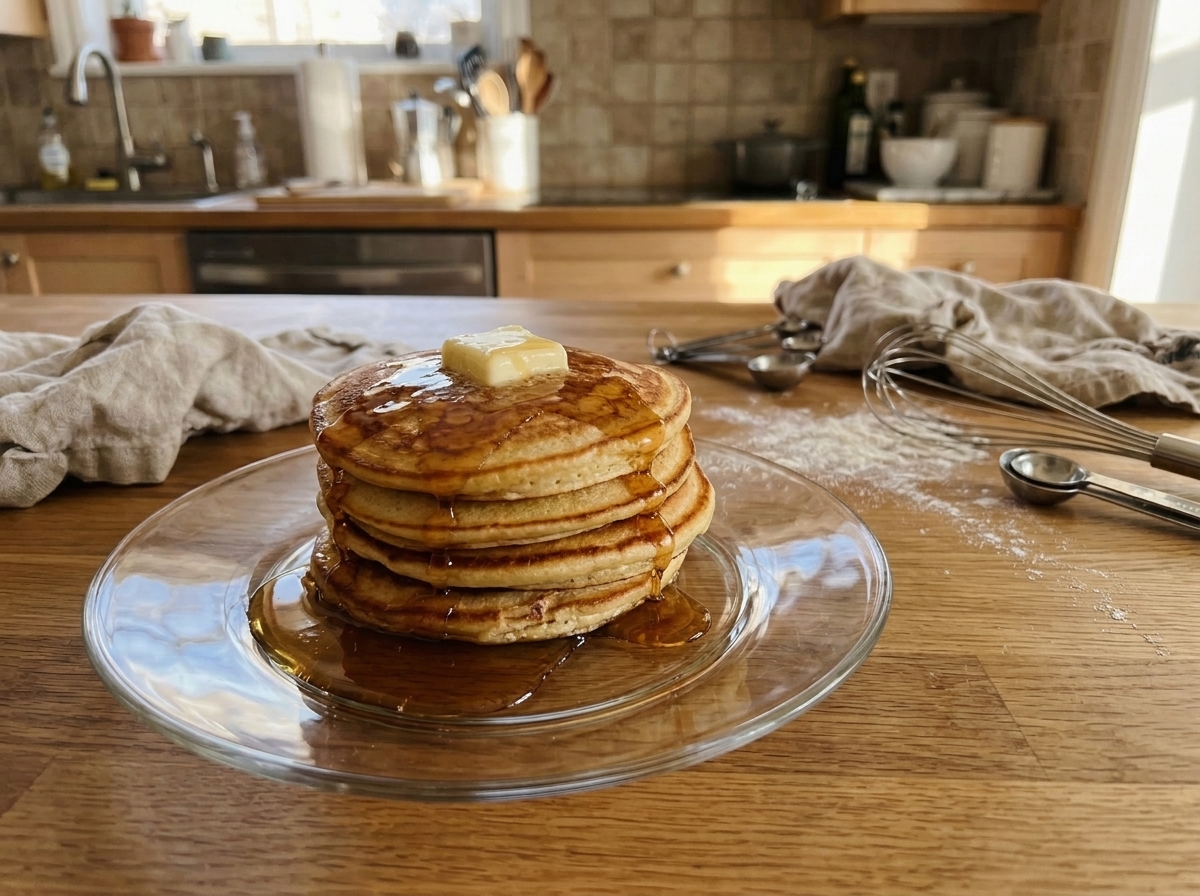
Homemade Pancakes Recipe
These easy homemade pancakes are soft, fluffy, and golden brown, made with simple pantry ingredients in about 25 minutes.
4
servings2
minutes7
minutes192
kcal9
minutesIngredients
1 cup almond flour
1/4 teaspoon salt
2 large eggs room temperature
1 tablespoon keto maple syrup
1/4 cup water
Directions
- In a mixing bowl, whisk together the almond flour, salt, eggs, keto maple syrup, and water until a smooth batter remains.
- Grease a large non-stick pan or skillet and place it over medium heat. Once hot, drop large spoonfuls of the batter onto the pan and immediately cover it. Cook the pancakes for 3-4 minutes, or until the edges begin to bubble. Remove the lid, carefully flip the pancakes, and cook for a further 1-2 minutes, covered. Repeat the process until all the batter has been cooked.
- Serve the pancakes immediately.
Notes
- TO STORE: Pancakes should be stored in the refrigerator, covered. They will keep well for up to 1 week.
- TO FREEZE: Place leftover pancakes in a ziplock bag and store them in the freezer for up to 6 months.
- REHEATING: Either microwave the pancakes for 30 seconds or reheat in a non-stick pan until warm.
Nutrition Facts
1 servings per container
- Amount Per ServingCalories192
- % Daily Value *
- Total Fat
16g
21%
- Sodium 109mg 5%
- Total Carbohydrate
6g
3%
- Dietary Fiber 3g 11%
- Protein 9g 18%
- Calcium 121mg 10%
- Iron 2mg 12%
- Potassium 35mg 1%
- Vitamin A 135mcg 15%
* The % Daily Value tells you how much a nutrient in a serving of food contributes to a daily diet. 2,000 calories a day is used for general nutrition advice.
