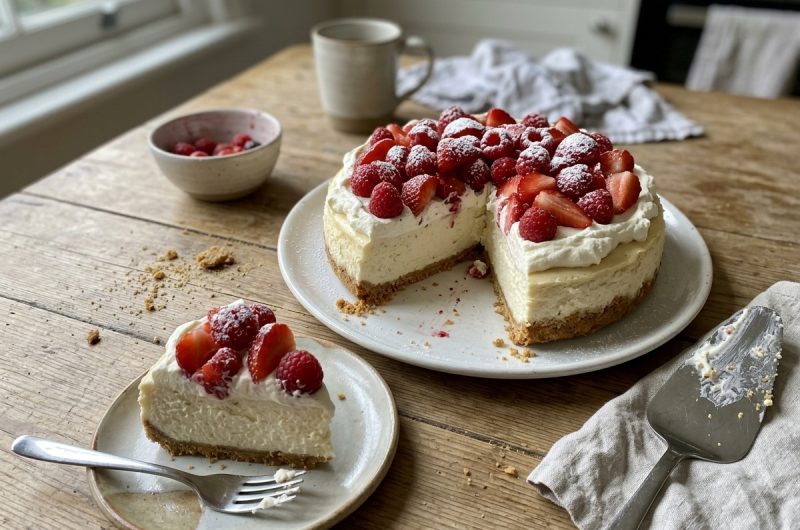

This sugar-free cheesecake is a delicious choice for anyone who enjoys a rich, creamy dessert without the added sugar found in traditional cheesecake recipes. It features a buttery almond flour crust and a smooth cream cheese filling that sets in the refrigerator rather than the oven. Finished with softly whipped cream and fresh berries, this no-bake keto cheesecake looks beautiful on the table while remaining simple enough to prepare at home.
One of the best things about this low-carb cheesecake recipe is its texture. The filling is light, silky, and creamy, while the crust adds a pleasant buttery crunch to every bite. A little lemon juice brightens the flavor, and vanilla extract gives the filling a familiar cheesecake taste. Powdered erythritol provides sweetness without regular sugar, making this recipe suitable for people looking for sugar-free dessert ideas.
Unlike many complicated desserts, this cheesecake does not require a water bath, baking time, or careful monitoring in the oven. You simply prepare the crust, mix the filling, fold in whipped cream, and let everything chill until firm. The refrigerator does most of the work, leaving you with a homemade dessert that is convenient for family gatherings, celebrations, weekend meals, or an everyday sweet treat.
This recipe is also naturally gluten-free when you use suitable gluten-free ingredients. Because the crust is made with almond flour and coconut flour instead of traditional wheat-based biscuits, there is no need for graham crackers or digestive biscuits. The result is a satisfying alternative to classic cheesecake that fits into many low-carb and keto-inspired menus without sacrificing the creamy texture people love.
How to Make the Creamy Sugar-Free Cheesecake Filling
The filling is the heart of this easy keto cheesecake. Full-fat cream cheese creates the classic cheesecake flavor, while powdered erythritol adds sweetness without ordinary granulated sugar. Lemon juice gives the mixture a subtle tang, and vanilla extract rounds out the flavor. Heavy cream is essential because whipping it incorporates air and gives the filling a lighter consistency while helping the cheesecake set during chilling.
For the smoothest results, allow the cream cheese to reach room temperature before mixing. Cold cream cheese can form small lumps, especially when combined with powdered sweetener and other ingredients. Softer cream cheese blends more easily, creating a uniform filling without requiring excessive mixing. Mascarpone can also be used in place of cream cheese if you prefer a richer, more delicate dairy flavor.
Powdered sweetener is generally preferable to a coarse granulated sweetener in no-bake cheesecake because it blends more smoothly into the filling. After mixing the cream cheese, erythritol, lemon juice, and vanilla, taste a small amount to check the sweetness. The optional liquid stevia can be added according to your preference. Sweetness varies between sweetener brands, so small adjustments are better than adding too much at once.
Whip the heavy cream separately until it becomes thick and holds a soft shape. Avoid whipping it until it is extremely stiff, as overwhipped cream can be difficult to fold evenly into the cream cheese mixture. Use a spatula to gently incorporate the cream, working carefully to preserve as much air as possible. This technique helps produce the soft, creamy texture that makes no-bake cheesecake so enjoyable.
Once the filling is ready, spoon it over the prepared crust and spread it evenly. A silicone spatula is useful for smoothing the top and reaching the edges of the tin. Cover the pan and refrigerate the cheesecake for six to eight hours or overnight. The filling needs this time to become firm enough to remove from the pan and cut into neat slices.
Sugar-Free Cheesecake Topping Ideas
The cheesecake tastes excellent without any topping, particularly if you enjoy the simple combination of vanilla, cream cheese, and buttery almond crust. However, a topping can add color, freshness, and a different flavor to each slice. Whipped cream and fresh strawberries or raspberries make an attractive choice because their slight tartness balances the rich filling.
For the topping included in this recipe, whip the additional heavy cream until it becomes thick but remains soft enough to spread. Avoid making it too stiff, as softer whipped cream creates a more delicate finish. Spread or pipe it over the chilled cheesecake, then arrange the halved or quartered strawberries and raspberries on top. A light dusting of powdered erythritol is optional if you want a finished dessert with a little extra sweetness.
You can also experiment with blueberries, blackberries, or a mixture of berries when they are in season. For a citrus variation, use sugar-free lemon curd, or add a little lemon zest for a brighter flavor. Melted sugar-free chocolate creates a richer dessert, while raspberry coulis adds a fruity finish. Keto caramel sauce and sugar-free blueberry jam are other options for anyone who wants to change the flavor without changing the basic recipe.
When choosing toppings, consider their carbohydrate and sugar content if you are following a strict keto diet. Not every product labeled sugar-free is necessarily low in carbohydrates, and fruit contributes natural sugars. Use suitable products and portions that fit your individual dietary goals. Adding toppings just before serving also helps preserve the fresh appearance of the berries and prevents excess moisture from collecting on the cheesecake.
Ingredient Substitutions and Crust Variations
Almond flour crust
The standard crust combines almond flour and coconut flour for a balanced texture. If you prefer not to use coconut flour, the original recipe provides an alternative of using one and a half cups, or 150 grams, of almond flour in total. Almond flour absorbs less moisture than coconut flour, which is why the proportions differ. Keep the alternative separate from the main ingredient list when making substitutions.
Coconut flour crust
For those who cannot use almond flour, the suggested alternative is one-half cup, or 60 grams, of coconut flour for the crust. Coconut flour absorbs considerably more moisture, so a smaller amount is needed. Check for nut-allergy considerations carefully, since coconut is treated differently under food-allergen labeling rules depending on the country, and the other ingredients must also be suitable for the person eating the cheesecake.
Other nut flours or seed meal
Ground pecans or walnuts can provide a different flavor while maintaining the nutty character of the crust. Sunflower seed meal is another option for people who want to avoid tree nuts, provided it is suitable for their dietary needs. The source recipe suggests replacing almond flour with these alternatives at a one-to-one ratio. Because different flours vary in texture and absorbency, check the mixture as you combine it with the melted butter.
Dairy-free crust option
To make the crust dairy-free, the butter can be replaced with the same amount of coconut oil or ghee as suggested in the source recipe. However, ghee is clarified butter and is not suitable for a strictly dairy-free diet. Coconut oil is generally the more appropriate choice for that purpose, but this substitution only changes the crust. The standard filling still contains cream cheese or mascarpone and heavy cream, so the complete cheesecake is not dairy-free.
Cheesecake without a crust
You can omit the crust if you prefer a filling-focused dessert. Line the bottom of the cake tin with parchment paper to make removal easier, then add the prepared cream cheese filling directly to the pan. The result will be closer to a chilled cheesecake mousse. It may be more delicate to lift and slice, so allow it to chill thoroughly and handle it carefully when serving.
Tips for the Best Sugar-Free Cheesecake
A few simple techniques can make a noticeable difference in the finished dessert. First, use room-temperature cream cheese so it blends smoothly with the sweetener and flavorings. Second, whip the heavy cream separately rather than mixing it directly into the cream cheese before whipping. These steps help create a smooth filling with a light texture and reduce the chance of lumps or an overly dense result.
Another important tip is to use a powdered sweetener. Erythritol can sometimes leave a slightly cooling sensation, and coarse granules may not dissolve evenly in a chilled dessert. Powdered erythritol helps produce a smoother mouthfeel. Since different sweeteners have different levels of sweetness, taste the filling before adding optional stevia, and avoid changing several ingredients at once.
Allow sufficient chilling time before removing the cheesecake from the tin. Although the filling may look firm after a few hours, the center can still be soft. Overnight refrigeration is a reliable choice when preparing the dessert for a special occasion. For clean slices, use a sharp knife and wipe it between cuts. Briefly warming the knife under hot water and drying it can also help create neater edges.
Frequently Asked Questions
Does sugar-free cheesecake contain carbohydrates?
Yes. Sugar-free cheesecake is not necessarily carbohydrate-free. Almond flour, coconut flour, dairy products, and berries all contribute carbohydrates in varying amounts. This recipe provides approximately 5.2 grams of total carbohydrates per serving, according to the supplied nutrition information. Net carbohydrates are listed as approximately 3.8 grams with cream and berries, or 2.8 grams without the additional cream and berries. Values can vary with ingredient brands and serving sizes.
Can I make this cheesecake ahead of time?
Yes. This is an excellent make-ahead dessert because the filling needs several hours to set. Prepare it the evening before serving and leave it covered in the refrigerator overnight. Add the whipped cream and fresh berries closer to serving time for the best appearance and texture. Preparing the cheesecake ahead also gives you more time to organize the rest of your meal.
Can I use mascarpone instead of cream cheese?
Yes. The recipe allows either full-fat cream cheese or mascarpone. Cream cheese gives the dessert a familiar tangy cheesecake flavor, while mascarpone produces a richer, more delicate taste. You can also replace half of the cream cheese with sour cream, as suggested in the source recipe, although changing the dairy mixture may affect the final texture. Keep the heavy cream in the recipe because it helps the filling become light and firm.
Does this recipe need gelatin?
Gelatin is not required for the standard recipe. The combination of cream cheese and whipped heavy cream creates a filling that firms up when chilled. However, adding extra liquid ingredients, such as fruit purée or other flavorings, may change the consistency. If you plan to experiment with substantial additions, you may need to adjust the recipe to ensure the cheesecake sets properly.
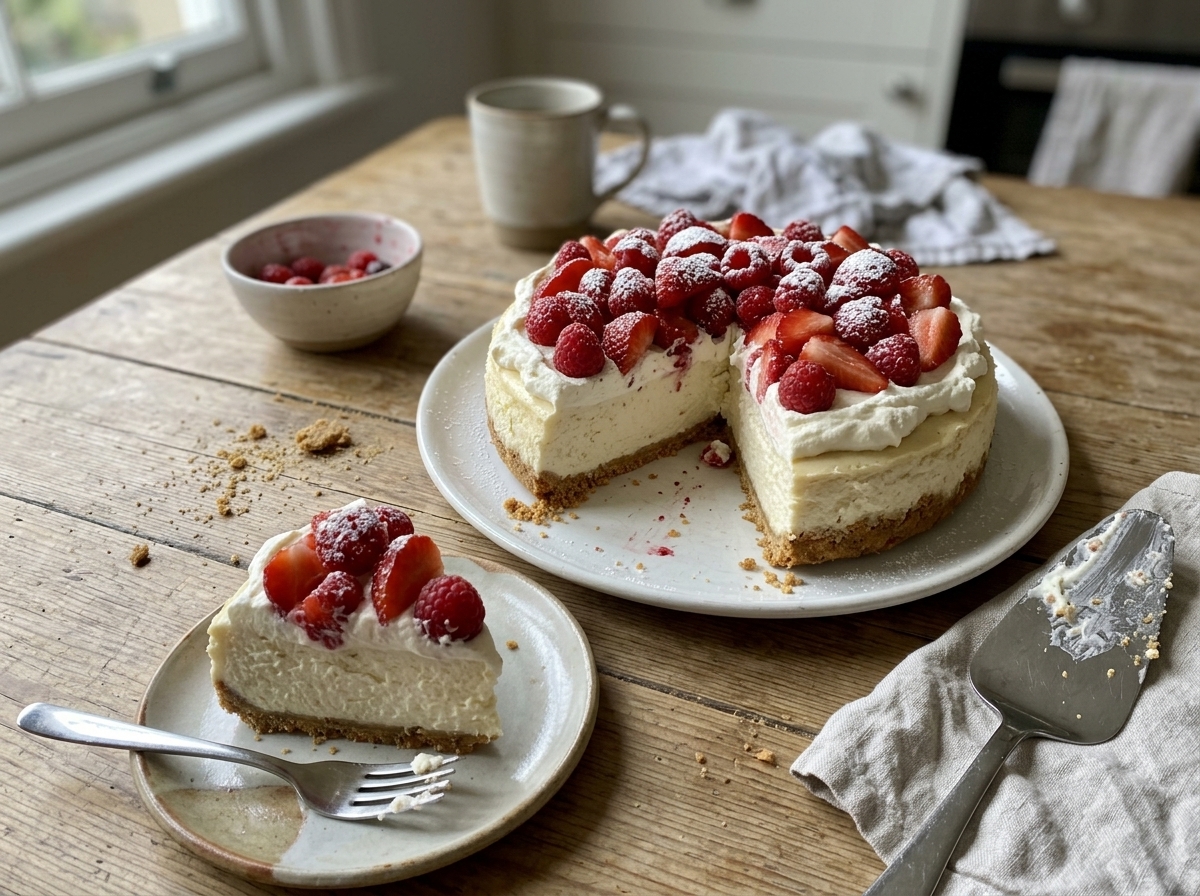
Sugar Free Cheesecake Dessert
This creamy no-bake sugar-free cheesecake features a buttery almond flour and coconut flour crust with a smooth vanilla cream cheese filling.
12
servings15
minutes7
hours290
kcal7
hours15
minutesIngredients
- For the Base
¾ cup (75 g) almond flour or ground almonds
¼ cup (30 g) coconut flour
1 tablespoon powdered sweetener
Pinch of salt
¼ cup (57 g) butter, melted
- For the Filling
1½ cups (360 g) cream cheese or mascarpone, at room temperature
⅔ cup (107 g) powdered erythritol
1 teaspoon lemon juice
1 tablespoon vanilla extract
1 cup (240 ml) heavy cream or double cream
5–10 drops liquid stevia, optional
- For the Topping (Optional)
¾ cup (180 g) heavy cream or double cream
½ cup (75 g) strawberries, halved or quartered
⅓ cup (40 g) raspberries
Directions
- Combine the almond flour, coconut flour, powdered sweetener, and salt in a mixing bowl.
- Add the melted butter and stir until the mixture forms moist, flaky crumbs.
- Lightly grease a seven-inch loose-bottom cake tin with melted butter.
- Press the mixture firmly into the bottom of the tin, using the back of a spoon to create an even surface.
- Place the cream cheese or mascarpone, powdered erythritol, lemon juice, and vanilla extract in a clean mixing bowl.
- Beat with an electric mixer for about one minute, until smooth and creamy. Taste and add the optional liquid stevia if desired.
- In a separate bowl, whip the heavy cream until thick and soft, taking care not to overwhip it.
- Gently fold the whipped cream into the cream cheese mixture with a spatula until evenly combined.
- Spoon the filling over the prepared crust and smooth the top with a silicone spatula.
- Cover the tin and refrigerate for six to eight hours or overnight, until the cheesecake is firm. For easier slicing, you can place it in the freezer for about 30 minutes before serving without allowing it to freeze solid.
- Whip the additional heavy cream until thick but still soft enough to spread.
- Run a sharp knife around the inside edge of the tin before releasing the springform or removing the loose-bottom pan.
- Spread the whipped cream over the chilled cheesecake.
- Arrange the strawberries and raspberries on top. Dust lightly with powdered erythritol if desired, then slice and serve.
Notes
- Net carbohydrates: Approximately 3.8 g per serving with the cream and berries, or 2.8 g without the additional cream and berries, according to the supplied recipe information.
- Pan size: Use a seven-inch loose-bottom cake tin or springform pan.
- Hands-on time: Approximately 15 minutes.
- Chilling: Allow six to eight hours or overnight for the best texture.
- Serving tip: For clean slices, wipe the knife between cuts.
- Storage: Keep covered in the refrigerator for up to five days or freeze for up to three months. For the best results, freeze without toppings.
- Crust alternative: The crust can be adapted with additional almond flour or suitable nut flour, as described in Part 1.
Nutrition Facts
- Calories: 290kcal
- Fat: 29.2g
- Carbohydrates: 5.2g
- Fiber: 1.5g
- Sugar: 3.3g
- Protein: 4.7g
