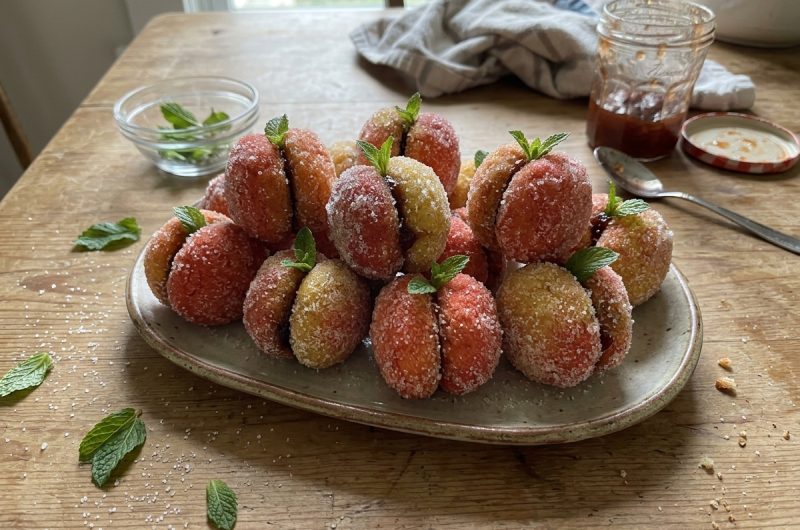

Peach cookies, also known as Persiki in Slavic cooking and Pesche Dolci in Italian baking, are charming homemade sandwich cookies designed to look like miniature ripe peaches. These beautiful treats are made from soft, buttery cookie shells that are baked, hollowed out, filled with creamy dulce de leche, and joined together to create a rounded peach shape.
A quick dip in yellow and red coloring gives them their signature appearance, while sparkling sanding sugar adds a delicate finish. Although they resemble fresh fruit, these decorative cookies contain no actual peaches.
These traditional peach-shaped cookies are especially popular for celebrations, holiday dessert tables, weddings, birthdays, and family gatherings. Their unusual appearance makes them stand out among ordinary cookies, and their rich caramel filling makes them just as enjoyable to eat as they are to serve.
Each cookie combines a tender outer shell with a smooth, sweet center, creating a satisfying contrast of textures. If you enjoy nostalgic homemade desserts, these colorful cookies are a wonderful addition to your baking collection.
One of the best things about homemade peach cookies is that they can be prepared ahead of time. The shells can be baked and hollowed before the filling is made, allowing you to organize the preparation into manageable stages.
Once assembled, the cookies benefit from a resting period that helps the filling settle and the outer coating dry. This makes them particularly convenient when preparing desserts for a large gathering, because you can finish them in advance instead of rushing through every step on the day of your event.
What Makes Peach Cookies So Special?
Peach cookies are different from everyday drop cookies because their appearance is an important part of the recipe. Instead of spreading into flat circles, the dough is shaped into small balls that bake into rounded shells. Each shell is hollowed out and filled before being paired with another shell, creating a complete fruit-like shape. Once colored and coated in sugar, the finished cookies resemble little peaches arranged on a serving plate.
The filling is another reason these cookies are so appealing. Dulce de leche provides a deep caramel flavor that complements the mild taste of the buttery shells. When combined with whipped butter and vanilla, it becomes a creamy filling that holds the two cookie halves together. Optional roasted hazelnuts can be added inside for a pleasant nutty surprise, giving each bite a little extra texture without changing the traditional peach-inspired appearance.
Their decorative coating also makes a noticeable difference. Yellow food coloring creates the warm base color, while red coloring adds the blush commonly seen on ripe peaches. Coarse sanding sugar gives the outside a sparkling finish and helps create a more attractive surface than ordinary granulated sugar. Small mint leaves placed at the top just before serving complete the fruit-inspired decoration, making these cookies look especially appealing on dessert platters and party tables.
The Tradition Behind Persiki and Pesche Dolci
Peach-shaped cookies are associated with several baking traditions, particularly in Eastern European and Italian kitchens. In Russian and Ukrainian households, persiki are familiar celebratory sweets that often appear at weddings, birthdays, holidays, and other special occasions. Their bright colors and fruit-like shapes make them suitable for serving to guests, while their sweet filling gives them the richness expected from a festive homemade dessert.
Italian pesche dolci, which translates to sweet peaches, share the same imaginative idea of turning ordinary cookies into something that resembles fruit. Some Italian versions use pastry cream, sweetened ricotta, or a liqueur-based coating, depending on the regional recipe. Slavic versions commonly feature a caramel-style filling made with dulce de leche or cooked sweetened condensed milk. Although the ingredients and finishing methods may differ, both traditions demonstrate how simple baked goods can become memorable desserts through careful shaping and decoration.
This recipe follows the Russian and Ukrainian style of peach cookies, using a buttery shell and dulce de leche filling. Yellow and red food coloring mixed with water provides the peach-like appearance without requiring an alcoholic ingredient. That makes this version suitable for family gatherings where an alcohol-free dessert is preferred. The result is a colorful cookie that celebrates a traditional baking idea while remaining practical for a modern home kitchen.
How to Hollow the Cookies Without Breaking Them
Hollowing the shells is one of the most delicate parts of making peach cookies, but it becomes much easier when the cookies are still slightly warm. Hold a cookie in the palm of your hand with its flat bottom facing upward. Use a melon baller or small teaspoon to gently remove the center, working carefully around the inside rather than pressing hard against one spot. Leave a shell approximately one-quarter inch thick so it remains strong enough to hold the filling.
Keep the removed crumbs in a separate bowl instead of mixing them into the dulce de leche cream. This recipe uses a smooth butter-based filling, and adding the crumbs would make it thicker and change its texture. The reserved crumbs can be used later as a topping for yogurt or ice cream, or combined with a little dulce de leche to make small dessert truffles. If a shell begins to crack, reduce the pressure and allow the cookie to cool slightly before continuing.
Try to make the cavities similar in size so the cookies have enough room for filling without becoming fragile. Matching the shells by size later will also help produce evenly shaped peaches. If you hollow them while they are completely cold, they may crumble more easily, so it is best to work in small batches and avoid leaving all the shells to cool for too long before preparing their centers.
How to Make Creamy Dulce de Leche Filling
Place the room-temperature unsalted butter in a mixing bowl and beat it with a mixer until it becomes pale and fluffy. This usually takes about two to three minutes, depending on the mixer and the butter’s temperature. Scrape down the sides and bottom of the bowl as needed so the butter whips evenly. Starting with properly prepared butter is essential because the filling should be smooth and spreadable rather than oily or lumpy.
Add the dulce de leche and vanilla extract, then continue beating until the ingredients are completely combined. The finished cream should be rich, smooth, and thick enough to remain inside the hollow cookie shells. If the butter is too cold, small lumps may remain in the mixture. If it is too warm, the filling can become loose and difficult to work with. Allow the butter to soften naturally at room temperature rather than melting it.
Transfer the finished filling into a piping bag or a clean zip-top bag with a small corner cut off. Piping makes it easier to fill each cavity evenly and keeps the outside of the shells cleaner. You can also use a small spoon if you prefer. Keep the filling at a workable consistency while assembling the cookies, and avoid overfilling the cavities so the cream does not spill out excessively when the two halves are pressed together.
Assembling the Peach-Shaped Sandwich Cookies
Before filling, arrange the hollow shells in pairs according to their size. Matching similarly sized halves helps create a rounded shape that looks balanced and holds together properly. Pipe or spoon filling into each cavity, adding enough to reach the edges without leaving large empty spaces. If you are using the optional roasted hazelnuts, place one inside a filled half before bringing the matching shell into position.
Press the two halves together gently until the filling connects them. Avoid squeezing too hard, because the delicate shells may crack or the cream may escape around the seam. A small amount of filling at the joining point helps the halves adhere, but wipe away any excess that makes the outside messy. Continue until all the cookies have been assembled into small, rounded peach shapes.
Let the assembled cookies sit briefly while you prepare the coloring bowls and sanding sugar. This gives you time to arrange your decorating station without rushing through the next stage. Because the shells are delicate, handle each cookie gently when moving it from the filling area to the coloring bowls. A light touch will help preserve the rounded shape and reduce the chance of breaking the finished peaches.
Creating the Realistic Peach Color
Divide the water between two small bowls. Add yellow food coloring to one bowl and red food coloring to the other, stirring until the colors are evenly distributed. Adjust the color strength gradually according to the food coloring you use. The yellow should provide the main peach tone, while the red creates a soft blush that resembles the color variation on ripe fruit.
Dip each assembled cookie quickly into the yellow water, then dip only part of it into the red water. A very brief dip is sufficient; soaking can soften the shells too much and cause the cookies to break apart. After coloring, allow excess liquid to drip away. You can also gently dab the surface against a folded paper towel, taking care not to rub off the color or damage the cookie.
Roll the damp cookie in sanding sugar immediately after dipping. The sugar should adhere to the surface and create a sparkling finish. Work with one cookie at a time because the coating sticks best while the outside is still slightly wet. If you wait too long, the surface may dry before the sugar has a chance to attach. Once coated, place each peach on a tray and continue with the remaining cookies.
Why the Resting Period Improves the Texture
After decorating, leave the cookies uncovered at room temperature for a few hours. This step allows excess surface moisture to evaporate and gives the colored sugar coating time to set. The outside becomes slightly firmer, while the filling gradually softens the inner cookie. The two halves also become more securely joined as the filling settles, making the finished dessert easier to pick up and serve.
Do not place freshly decorated peach cookies straight into a tightly closed container. Trapped moisture can make the sugar coating damp and cause the shells to become soggy. An uncovered resting period is especially helpful when you want the cookies to retain their appearance for a party or celebration. Once the exterior has dried, arrange them in a single layer in a container lined with paper towel and refrigerate them as directed.
For the most attractive presentation, add the mint leaves shortly before serving. Placing them into the cookies too early can make the leaves wilt, particularly during refrigerated storage. The combination of the peach-colored shells, sparkling sugar, and fresh green garnish creates a realistic fruit-inspired look without complicated decorating equipment. These small finishing details can make homemade cookies look special even when you prepare them in an ordinary kitchen.
Frequently Asked Questions About Peach Cookies
Do peach cookies taste like real peaches?
No. Traditional peach cookies are named for their appearance rather than their flavor. The shells taste like sweet, buttery cookies, while the center has a rich caramel flavor from dulce de leche. The yellow and red coloring and sparkling sugar create the appearance of ripe peaches, but the recipe does not contain fresh or canned peaches.
Why are my peach cookies cracking when I hollow them?
The shells may crack if they have cooled completely, if too much pressure is applied, or if the baked shells are too thin. Allow them to cool just enough to handle safely, then scoop out the centers gently with a melon baller or teaspoon. Leaving a sturdy outer wall helps the cookies hold their shape during filling and assembly.
Why do my peach cookies become soggy?
Excess moisture from the coloring or storing the cookies in a sealed container before the coating has dried can make them soggy. Dip each cookie briefly, remove excess liquid, and roll it in sanding sugar while the surface is damp. Let the decorated cookies stand uncovered for a few hours before transferring them to a lined container in the refrigerator.
How can I make the sugar coating sparkle?
Use coarse sanding sugar rather than ordinary granulated sugar. Its larger crystals are better suited to maintaining a decorative finish. Roll the cookies in the sugar immediately after dipping so the crystals stick to the damp surface. Allow the coating to dry before storing the cookies to help preserve its appearance.
Can I make peach cookies without alcohol?
Yes. This recipe uses water mixed with yellow and red food coloring instead of an alcoholic liqueur. It provides the characteristic peach-inspired colors without requiring a specialty ingredient. The cookies retain their sweet caramel filling and decorative finish, making them suitable for gatherings where an alcohol-free dessert is preferred.
Can I make peach cookies in advance?
Yes. These cookies are well suited to advance preparation because the filling and coating benefit from resting. You can prepare them the day before serving, let the exterior dry, and refrigerate them in a covered container. Add the mint garnish shortly before serving for the freshest presentation.
What can I use instead of dulce de leche?
Dulce de leche is the specified filling for this version and gives the cookies their signature caramel flavor. Cooked sweetened condensed milk is listed as an alternative way to obtain it. Other fillings would change the recipe’s taste and texture, so use the listed dulce de leche option if you want to keep the original ingredients unchanged.
How many peach cookies does the recipe make?
The exact yield depends on the size of the dough portions and how many shells you bake. Using a consistent small scoop helps keep the cookies uniform and makes it easier to match the halves. Remember that two hollow shells are needed for every finished peach cookie, so the number of assembled cookies will be half the number of usable shells.
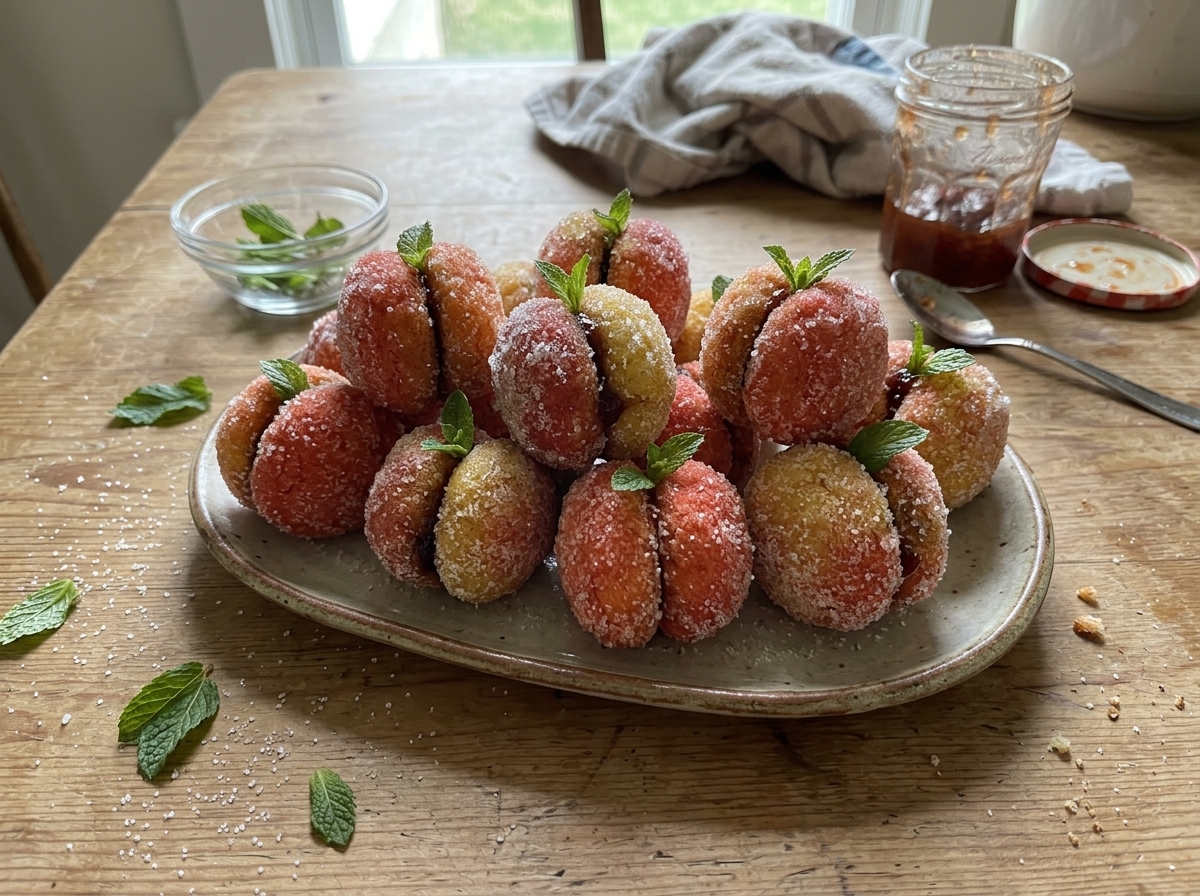
Peach Cookies Dessert
These traditional peach-shaped cookies feature tender buttery shells filled with creamy dulce de leche, dipped in yellow and red coloring, and coated in sparkling sanding sugar.
40
servings2
hours1
hour170
kcal3
hoursIngredients
- For the peach cookie shells
4 large eggs (200 g)
1 cup granulated sugar (200 g)
1 teaspoon vanilla extract
1 cup unsalted butter, melted and cooled (227 g)
4 tablespoons all-purpose flour (38 g)
2 teaspoons baking powder
3½ cups all-purpose flour (525 g), fluffed, gently scooped, and leveled
- For the dulce de leche filling
8 oz unsalted butter, at room temperature (227 g)
1 can dulce de leche or cooked sweetened condensed milk, at room temperature
1 teaspoon vanilla extract
40 whole roasted hazelnuts (optional)
- For decorating
1 cup sanding sugar (125 g)
Yellow food coloring
Red food coloring
2 cups water (473 ml), divided
Fresh mint leaves
Directions
- Mix the eggs, granulated sugar, and vanilla extract in a large bowl until combined.
- Add the melted and cooled butter and stir well.
- Mix in 4 tablespoons of flour and the baking powder until thoroughly combined. Cover the mixture and let it rest for one hour.
- Line a large baking sheet with parchment paper. Preheat the oven to 350°F (175°C), positioning the rack in the center.
- Add the remaining 3½ cups of flour to the rested mixture and mix until a workable dough forms.
- Divide the dough into small, even portions of approximately 15 g each. Roll each portion into a ball and flatten it slightly.
- Arrange the dough balls on the prepared baking sheet, leaving approximately one inch between them.
- Bake for 10–12 minutes, until the tops remain pale and the bottoms are lightly golden. Repeat with the remaining dough.
- Let the cookies cool just enough to handle safely. Use a melon baller or teaspoon to scoop out the center of each shell, leaving an outer wall about ¼ inch thick. Reserve the crumbs for another use.
- Beat the room-temperature butter with an electric mixer for 2–3 minutes, until pale and fluffy. Scrape the bowl as needed.
- Add the dulce de leche and vanilla extract. Beat for about one minute, until the filling is smooth and evenly combined.
- Transfer the filling to a pastry bag or zip-top bag with a small corner cut off.
- Match the hollow shells into pairs of similar sizes.
- Fill each cavity generously with dulce de leche cream. If desired, place one roasted hazelnut inside one half of each cookie.
- Press the two halves together gently to create a rounded peach shape. Remove excess filling from the seam.
- Place the sanding sugar in a bowl.
- Divide the water between two small bowls. Add yellow food coloring to one bowl and red food coloring to the other, stirring to distribute the colors.
- Quickly dip each assembled cookie in the yellow-colored water, then dip part of it into the red-colored water.
- Let excess liquid drip off and gently dab the cookie with a paper towel if needed.
- Roll each damp cookie in sanding sugar until coated, then place it on a tray.
- Leave the decorated cookies uncovered at room temperature for a few hours so the coating can dry and the filling can settle.
- Line a container with paper towel, arrange the cookies in a single layer, cover, and refrigerate.
- Insert fresh mint leaves just before serving to create the appearance of peach leaves.
Nutrition Facts
- Calories: 170kcal
- Fat: 10g
- Carbohydrates: 19g
- Fiber: 0.3g
- Sugar: 10g
- Protein: 2g
