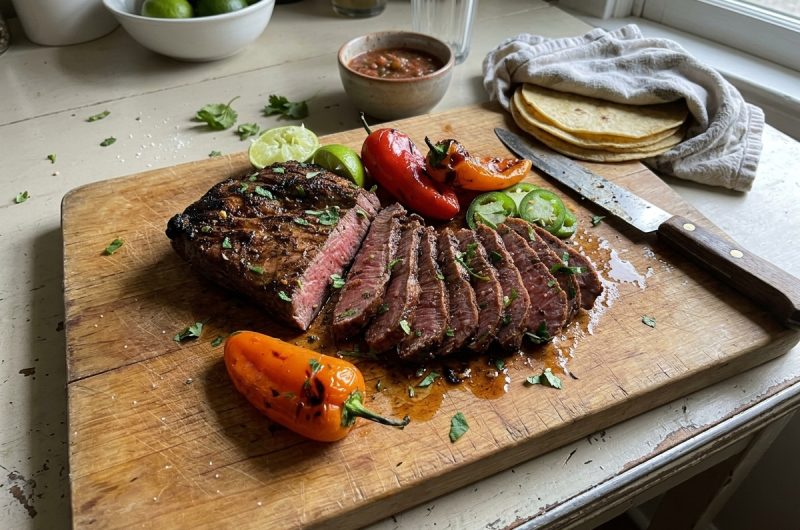

A great carne asada marinade transforms an ordinary cut of beef into a flavorful, tender, and juicy grilled steak. This best carne asada marinade combines fresh citrus juices, olive oil, soy sauce, red wine vinegar, garlic, onion, cilantro, jalapeno, and a balanced blend of spices.
Every ingredient contributes something special, creating a bold Mexican-inspired flavor that works beautifully with flat iron steak, flank steak, or skirt steak. After several hours in the refrigerator, the beef absorbs the savory, tangy, herbal, and spicy flavors, making every bite satisfying.
The real secret to delicious carne asada is giving the steak enough time to marinate and then cooking it over high heat. The hot grill creates a beautifully browned exterior while helping the inside remain tender and juicy. This combination of a flavorful marinade and proper grilling technique produces steak that tastes wonderful on its own or tucked into warm tortillas with fresh toppings.
Whether you are planning a family dinner, a weekend barbecue, or a casual taco night, this easy carne asada recipe brings plenty of flavor to the table without requiring complicated cooking techniques.
Another advantage of homemade carne asada marinade is how easily it fits into different meals. You can serve the grilled beef with rice and vegetables, prepare steak tacos, or add thin slices to burritos and quesadillas. Fresh guacamole, tomato salsa, grilled peppers, onions, and lime wedges make especially delicious accompaniments. Because the marinade uses familiar ingredients that work together naturally, you can prepare it in your own kitchen and enjoy a restaurant-inspired grilled steak meal whenever you want.
What Is Carne Asada?
Carne asada is a Mexican-style grilled beef dish whose name translates to grilled meat. It is commonly prepared by marinating beef with citrus, seasonings, herbs, and other flavorful ingredients before cooking it over a hot grill. Once the meat develops a browned, slightly charred exterior, it is rested and sliced into thin pieces. The result is flavorful grilled beef that can be enjoyed by itself or used as the main ingredient in a variety of Mexican-inspired meals.
Although carne asada can be prepared with different cuts of beef, flank steak, skirt steak, and flat iron steak are popular choices. These cuts develop excellent flavor when marinated and grilled properly. The ideal cooking method creates a nicely seared surface without leaving the center dry or tough. Cutting the finished steak against the grain is equally important because it shortens the muscle fibers, making each piece easier to chew.
This carne asada marinade takes inspiration from the bright, savory flavors often associated with Mexican-style grilled steak. Lime juice and orange juice provide a refreshing citrus taste, while garlic, onion, cilantro, jalapeno, and chili powder build layers of flavor. Soy sauce adds savory depth, and red wine vinegar contributes additional acidity. Together, these ingredients give the beef a distinctive flavor that pairs well with traditional taco toppings, rice, beans, and grilled vegetables.
Why You Will Love This Easy Carne Asada Marinade
One of the best things about this recipe is its combination of bold flavor and straightforward preparation. You do not need special equipment or advanced cooking skills to prepare delicious carne asada at home. Simply combine the marinade ingredients, coat the steak thoroughly, and let it rest in the refrigerator while the flavors develop. When you are ready to eat, a hot grill does most of the remaining work. This makes the recipe suitable for both experienced home cooks and beginners who want to improve their grilled steak.
The citrus-based marinade gives the beef a bright, tangy character that balances its rich, savory flavor. Olive oil helps distribute the marinade over the surface of the steak, while garlic, onion, cilantro, and jalapeno provide freshness and aroma. Chili powder, paprika, black pepper, and crushed red pepper flakes contribute warmth and spice. The resulting flavor is complex without relying on an unnecessarily long ingredient list or complicated preparation.
This recipe is also convenient for entertaining because much of the preparation can be completed ahead of time. You can mix the marinade and refrigerate the steak for several hours before guests arrive. Once everyone is ready to eat, preheat the grill and cook the beef shortly before serving. Allowing the meat to marinate overnight can be especially helpful when planning a busy day, although you should follow appropriate refrigeration practices throughout the process.
Finally, carne asada is versatile enough to suit many occasions. Serve it sliced on a platter for a family barbecue, use it to fill tacos for a casual dinner, or arrange it with rice and grilled vegetables for a complete meal. You can also prepare a toppings station with salsa, guacamole, cilantro, lime wedges, and warm tortillas so everyone can build their own plate according to their preferences.
Choosing the Best Steak for Carne Asada
The cut of beef you choose affects the texture, cooking time, and final flavor of your carne asada. This recipe uses flat iron steak, which is known for its beefy flavor and relatively tender texture when cooked properly. It works particularly well with a bold marinade because the meat develops a flavorful grilled exterior while retaining a satisfying texture inside. Flat iron steak is a practical choice when you want steak that can be sliced and served in tacos, bowls, or a traditional grilled dinner.
Skirt steak is another excellent option for carne asada. It has a pronounced beef flavor and works well when cooked quickly over high heat. Because skirt steak can become chewy if overcooked, careful timing and slicing against the grain are particularly important. Flank steak is also suitable, offering a leaner cut with long muscle fibers that benefit from marinating and proper slicing. Both alternatives can be used when flat iron steak is unavailable.
Whichever cut you select, try to choose pieces with reasonably even thickness so they cook at a similar rate. If the steak is particularly thick or uneven, cooking times may vary from the instructions. A thermometer can help you check the internal temperature accurately, especially when preparing meat for people with different preferences. Remember that the suggested grilling time is an estimate, not a guarantee, because the thickness of the steak and the heat of your grill affect how quickly it cooks.
How to Make Carne Asada on the Grill
Prepare the marinade
Start by adding the olive oil, soy sauce, lime juice, orange juice, red wine vinegar, diced onion, chopped cilantro, garlic, jalapeno, sea salt, chili powder, paprika, black pepper, and crushed red pepper flakes to a large glass dish. Whisk everything together until the ingredients are distributed throughout the liquid. Taste a small amount before adding the raw steak and adjust the seasoning if necessary.
Coat and marinate the steak
Place the flat iron steaks in the dish and turn them over several times so the marinade coats both sides. Cover the dish and refrigerate for at least four hours. If you are planning ahead, leave the steak overnight in the refrigerator for convenience. Make sure the beef remains refrigerated throughout the marinating period, and avoid reusing the raw marinade as a finishing sauce.
Preheat the grill
Heat your grill to high and allow the cooking surface to become properly hot before adding the steak. A hot grill helps create the characteristic browned exterior associated with carne asada. When you are ready to cook, remove the steaks from the marinade and let excess liquid drip away. Discard the used marinade, then place the beef on the grill carefully to avoid splashing or flare-ups.
Grill until cooked to your preference
Grill the flat iron steak for approximately five minutes on the first side without moving it unnecessarily. Turn it over and cook the other side for about another five minutes, adjusting the time according to the thickness of the meat and the temperature of your grill. The goal is a well-browned exterior with a juicy center. Use a food thermometer to check doneness rather than relying on cooking time alone.
Rest and slice the beef
Transfer the cooked steak to a clean cutting board and allow it to rest for several minutes before slicing. Resting gives the juices time to redistribute, helping the meat remain moist when cut. Use a sharp knife to slice the steak thinly against the grain. This technique shortens the muscle fibers and helps produce more tender bites, especially when serving the beef in tacos or other dishes.
Serve with your favorite toppings
Arrange the sliced carne asada on a platter and serve it with warm tortillas, guacamole, fresh tomato salsa, lime wedges, cilantro, and grilled bell peppers with red onion. You can also pair it with rice, beans, or grilled vegetables for a more substantial meal. For taco night, place the toppings in separate bowls so everyone can assemble their own tacos and choose their preferred combination of fresh, creamy, and spicy flavors.
Helpful Tips for Tender, Juicy Carne Asada
The first important tip is to give the steak enough time to absorb the marinade. Four hours is the recommended minimum for this recipe, while overnight marinating is a convenient option when preparing in advance. Make sure the meat is coated on every side and kept covered in the refrigerator. Even coverage helps distribute the marinade’s flavors across the steak instead of leaving some areas relatively unseasoned.
Next, preheat the grill thoroughly before cooking. Adding steak to a properly heated grill helps the outside brown efficiently and creates the characteristic grilled flavor. Avoid constantly moving the beef, because allowing each side to cook undisturbed encourages browning. If you are cooking indoors, a heavy cast iron skillet is a useful alternative. Heat it thoroughly, provide adequate ventilation, and cook the steak in batches if necessary to prevent overcrowding.
Pay close attention to doneness and avoid relying entirely on the five-minute-per-side guideline. Thinner steaks may cook faster, while thicker pieces may need additional time. For food safety, whole cuts of beef should reach an internal temperature of 145°F (63°C), followed by at least a three-minute rest, according to USDA guidance. This temperature is higher than the medium-rare range sometimes used in restaurant-style steak recipes, so choose your cooking approach with food safety in mind.
Finally, always slice against the grain. Look for the direction in which the long muscle fibers run, then cut across them rather than parallel to them. This simple technique can make a noticeable difference in tenderness. If you are using flank or skirt steak, pay particular attention to the grain because the muscle fibers are often more visible. Thin, even slices are ideal for tacos, burrito bowls, and serving on a platter.
Frequently Asked Questions About Carne Asada Marinade
Can I prepare the marinade ahead of time?
Yes, you can combine the marinade ingredients ahead of time and refrigerate the mixture in a covered container. When you are ready to prepare the steak, add the beef and make sure it is coated evenly. Preparing the mixture in advance can save time on a busy cooking day. Keep the marinade intended for raw beef separate from any sauces or toppings you plan to serve at the table.
Can I make carne asada without an outdoor grill?
Yes, a heavy cast iron skillet can work well when outdoor grilling is not possible. Heat the skillet thoroughly before adding the steak, and avoid overcrowding the cooking surface. Cook the meat according to its thickness and check the internal temperature with a thermometer. Indoor cooking may produce a slightly different smoky flavor, but the citrus, garlic, herbs, and spices will still provide plenty of character.
How can I adjust the spice level?
jalapeno and crushed red pepper flakes contribute much of the heat in this marinade. For a milder result, remove one or both ingredients, or reduce their quantities to suit your taste. If you enjoy spicy food, keep the listed amounts and serve the steak with additional fresh jalapeno or spicy salsa at the table. Adjusting the heat allows you to make the dish more suitable for different preferences.
Why should I slice the steak against the grain?
Slicing against the grain cuts across the long muscle fibers, making them shorter and easier to chew. This is particularly useful for flank and skirt steak, which can feel chewy when cut incorrectly. After resting the cooked beef, identify the direction of the fibers and slice perpendicular to them. Cutting thin slices also makes the carne asada easier to serve in tortillas and distribute evenly throughout a meal.
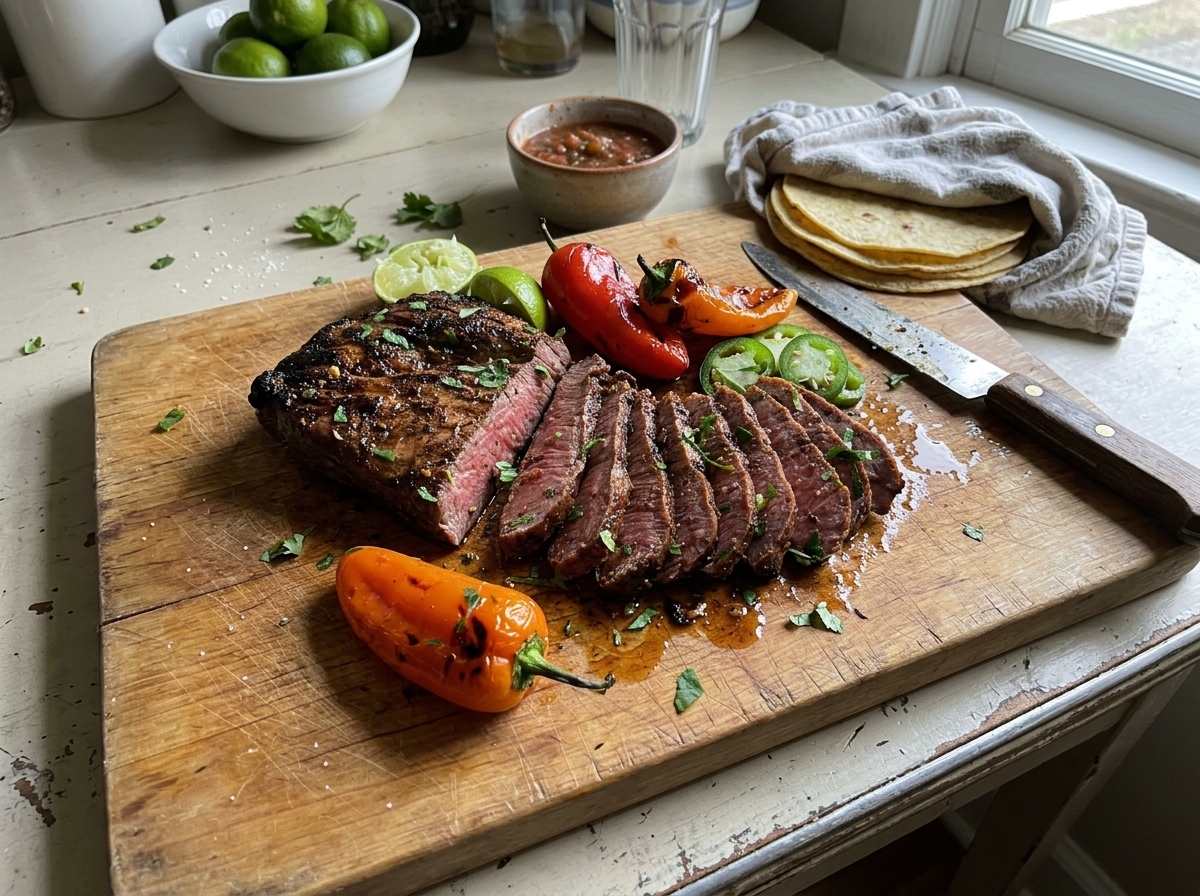
High-Protein Carne Asada Marinade Recipe
Juicy, flavorful flat iron steak marinated in a zesty blend of lime juice, orange juice, garlic, cilantro, jalapeno, soy sauce, and spices, then grilled until beautifully browned.
4
servings20
minutes10
minutes883
kcal240
minutes4
hours30
minutesIngredients
– 3 lb flat iron steak
- For the Marinade
½ cup olive oil
¼ cup soy sauce
1 large lime, juiced
¼ cup freshly squeezed orange juice
2 tablespoons red wine vinegar
1 medium onion, diced
½ cup finely chopped cilantro
4 cloves garlic, finely chopped
1 medium jalapeno pepper, finely chopped
2–3 teaspoons sea salt, or to taste
2 teaspoons chili powder
1 teaspoon paprika powder
1 teaspoon black pepper
1 teaspoon crushed red pepper flakes
Directions
- Whisk the olive oil, soy sauce, lime juice, orange juice, red wine vinegar, diced onion, chopped cilantro, garlic, jalapeno, sea salt, chili powder, paprika, black pepper, and crushed red pepper flakes together in a large glass dish.
- Add the flat iron steak and turn it over to coat both sides thoroughly. Cover and refrigerate for at least 4 hours or overnight.
- Preheat the grill to high heat. Remove the steak from the marinade and discard the used marinade.
- Grill the steak for approximately 5 minutes on each side, adjusting the cooking time according to its thickness and desired doneness. Use a food thermometer to check the internal temperature.
- Transfer the cooked steak to a clean cutting board and let it rest for at least 3 minutes.
- Slice the steak thinly against the grain and serve with warm tortillas, guacamole, fresh tomato salsa, lime wedges, cilantro, and grilled bell peppers with red onion.
Notes
- Marinate the steak in the refrigerator for at least 4 hours.
- Preheat the grill thoroughly for a nicely browned exterior.
- Reduce or omit the jalapeño and red pepper flakes for a milder flavor.
- A cast iron skillet is a good alternative to an outdoor grill.
- Always slice the cooked steak against the grain for a more tender bite.
- Discard marinade that has contacted raw beef.
Nutrition Facts
- Calories: 883kcal
- Fat: 63g
- Carbohydrates: 9g
- Fiber: 2g
- Sugar: 3g
- Protein: 67g
