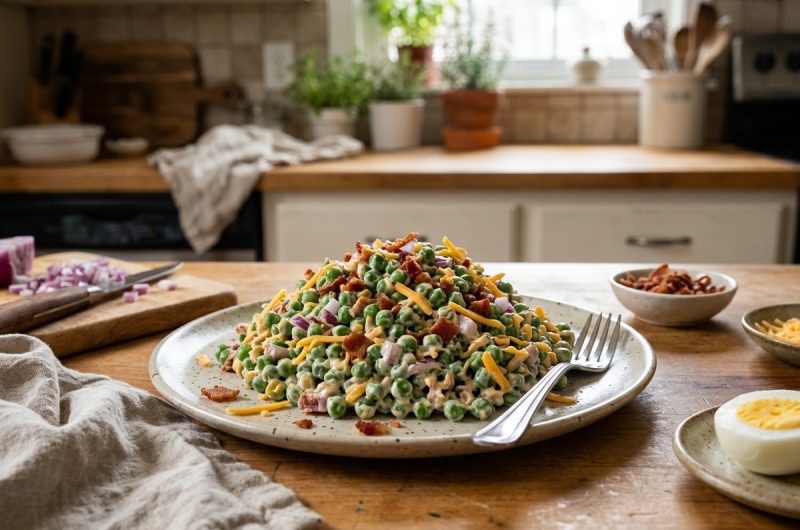

Creamy pea and bacon salad is a classic side dish made with sweet green peas, crispy bacon, shredded cheddar cheese, and red onion tossed in a smooth, tangy dressing. It combines simple ingredients to create a refreshing salad with a balance of creamy, savory, and slightly sweet flavors.
Whether you are planning a summer barbecue, a family dinner, a holiday gathering, or a casual lunch, this easy pea salad is a delicious addition to the table.
One of the best things about this creamy bacon pea salad is how little preparation it requires. You do not need to cook the peas or spend time preparing complicated ingredients. Frozen peas can be thawed, the bacon can be cooked ahead of time, and the dressing comes together in just a few minutes.
After mixing everything, a short chilling period allows the flavors to blend, giving the salad its familiar old-fashioned taste and satisfying texture.
What Makes This Pea Salad So Delicious?
The secret to a great pea salad is the combination of ingredients that bring different textures and flavors to every bite. Sweet peas provide a fresh, tender base, while crispy bacon adds a smoky, salty taste. Cheddar cheese contributes a rich, savory flavor, and red onion brings a little sharpness that balances the creamy dressing. Together, these ingredients make a simple vegetable salad feel hearty and satisfying.
The dressing is equally important because it brings all the ingredients together. Sour cream gives it a smooth texture and a gentle tang, while mayonnaise adds richness. A little sugar balances the acidity of the apple cider vinegar, and salt and black pepper enhance the overall flavor. The result is a creamy dressing that coats the peas without overwhelming their natural sweetness.
Another reason this recipe works so well is that it can be prepared in advance. Unlike salads that need to be assembled immediately before eating, pea and bacon salad benefits from chilling in the refrigerator. The dressing has time to settle around the peas, cheese, onion, and bacon, creating a more blended flavor. It is a practical choice when you want a side dish ready before guests arrive.
How to Make Creamy Pea and Bacon Salad
Prepare the Creamy Salad Dressing
Begin by adding the sour cream, mayonnaise, sugar, apple cider vinegar, salt, and black pepper to a small mixing bowl. Stir until the mixture becomes smooth and creamy, making sure the sugar and seasonings are evenly distributed. Scrape the sides of the bowl as needed so that no thick streaks of sour cream or mayonnaise remain.
Cover the dressing and place it in the refrigerator while preparing the remaining ingredients. This short resting period keeps the dressing cold and gives the flavors a little time to combine. Preparing it separately also makes it easier to adjust the consistency before it is mixed with the peas, bacon, cheese, and onion.
Thaw and Drain the Peas
Measure the frozen peas and allow them to thaw completely. You can thaw them in the refrigerator or place them in a bowl until they are no longer frozen. Avoid cooking them, because the salad is intended to have tender peas that retain their shape rather than soft, mushy vegetables.
Once thawed, drain away any excess water. This step is important because water left on the peas can dilute the dressing and make the salad watery. If the peas feel particularly wet, gently pat them dry with a clean paper towel. Handle them carefully so they remain whole and attractive in the finished dish.
Cook and Crumble the Bacon
Cook the bacon until it is crisp and cooked through, using your preferred cooking method. Transfer it to a paper towel-lined plate to remove excess grease, then allow it to cool. Once cooled, crumble or chop the bacon into small pieces that can be distributed throughout the salad.
The bacon should be cool before mixing it with the other ingredients. Adding hot bacon to the peas can affect the temperature of the salad and soften the dressing. If you are preparing the recipe ahead of time, cook the bacon earlier and refrigerate it separately until you are ready to assemble everything.
Combine the Salad Ingredients
Place the thawed peas in a large mixing bowl. Add the crumbled bacon, shredded cheddar cheese, and diced red onion. Gently toss the ingredients together until the bacon, cheese, and onion are spread throughout the peas. Using a large bowl gives you enough room to mix everything without crushing the vegetables.
Try to distribute the ingredients evenly instead of allowing the bacon or cheese to collect in one area. A gentle mixing motion helps preserve the shape of the peas. At this stage, the salad should have a colorful appearance, with green peas, red onion, cheddar cheese, and bacon visible throughout the bowl.
Add the Dressing and Chill
Remove the prepared dressing from the refrigerator and pour it over the salad ingredients. Toss gently until the peas, bacon, cheese, and onion are coated in the creamy mixture. Check the bottom and sides of the bowl to make sure the dressing is distributed evenly rather than sitting in one spot.
Cover the bowl and refrigerate the salad for two to three hours before serving. Chilling allows the flavors to blend and keeps the salad refreshing. Serve it cold as a side dish for family meals, summer cookouts, holiday dinners, or casual gatherings. If desired, add a little reserved bacon on top just before bringing it to the table.
What to Serve with Creamy Bacon Pea Salad
Creamy pea salad pairs well with grilled chicken, roasted turkey, baked fish, and grilled salmon. Its cool temperature and tangy dressing provide a pleasant contrast to warm, savory main dishes. It also works well alongside burgers, grilled meats, and other barbecue favorites, making it a useful option for outdoor meals and summer gatherings.
For a larger menu, serve it with grilled vegetables, roasted potatoes, fresh green salad, or corn on the cob. The combination of peas, bacon, and cheddar gives this side dish a richer flavor than a simple leafy salad, so it balances particularly well with lightly seasoned main courses. You can also include it on a holiday buffet alongside roasted meats and other traditional sides.
Because the salad is easy to prepare ahead, it is useful when planning meals for a crowd. Make it earlier in the day, keep it chilled, and serve it in a clean bowl when guests are ready to eat. If you are transporting it to a potluck or picnic, use an insulated cooler with ice packs to keep it cold.
How to Store Pea and Bacon Salad
Store leftover creamy pea and bacon salad in an airtight container in the refrigerator. Keep the lid tightly sealed to help preserve freshness and prevent the salad from absorbing odors from other foods. For the best quality, refrigerate leftovers promptly after serving rather than leaving them on the counter.
The salad may release a little moisture while it rests, particularly as the peas settle and the dressing continues to coat the ingredients. If this happens, gently stir the mixture before serving again. For the best texture, you can also keep the dressing separate until shortly before serving, especially when preparing the salad in advance.
Because this recipe contains mayonnaise and sour cream, keep it refrigerated at 40°F (4°C) or below. Do not leave it at room temperature for more than two hours, or more than one hour when temperatures exceed 90°F (32°C). Discard the salad if it has been left out beyond safe time limits. For leftovers that have been handled and refrigerated properly, aim to eat them within three to four days.
Can You Freeze Creamy Pea and Bacon Salad?
Freezing this salad is not recommended. The creamy dressing may separate after thawing, and the peas can lose their firm texture. Sour cream and mayonnaise-based mixtures often become watery or grainy after freezing, which can affect the appearance and consistency of the finished dish.
Frozen peas are ideal for making this salad because they can be thawed once and used without cooking. Refreezing the assembled salad is a different matter because the dressing, cheese, bacon, and vegetables will all be affected by the freezing and thawing process. Instead of freezing leftovers, prepare an amount that can be enjoyed within a few days and store it in the refrigerator.
If you need to prepare the recipe ahead of an event, prepare the dressing and cook the bacon in advance, storing them separately in the refrigerator. Thaw and drain the peas, then combine the ingredients closer to serving time. This approach offers the convenience of advance preparation while helping the finished salad retain its texture.
Frequently Asked Questions About Creamy Pea Salad
Can I Use Canned Peas Instead of Frozen Peas?
Frozen peas are the preferred choice because they generally hold their shape better and provide a firmer texture. Canned peas are already cooked and tend to be softer, so they may break apart when combined with the creamy dressing. If canned peas are your only option, drain them thoroughly and handle them very gently, but expect a softer result than the original recipe.
Do Frozen Peas Need to Be Cooked?
No, the frozen peas do not need to be cooked for this salad. They should simply be thawed completely and drained before mixing. Cooking them can make them softer than necessary and may reduce the texture that makes the salad enjoyable. Using thawed peas keeps preparation quick and helps the ingredients remain distinct.
Can I Make This Salad the Day Before?
Yes, you can prepare the salad a day ahead and keep it covered in the refrigerator. The chilling time allows the flavors to blend, making it convenient for parties, cookouts, and holiday meals. For the best texture, consider storing the dressing separately and combining it with the peas, bacon, cheese, and onion closer to serving time. Keep all ingredients refrigerated during preparation and storage.
Why Is My Pea Salad Watery?
Excess moisture from thawed peas or other vegetables is a common reason for watery pea salad. Drain the peas well after thawing and pat them dry if necessary. If you add cucumber or other fresh vegetables, remove excess moisture before mixing. It is also helpful to measure the dressing carefully and avoid adding extra liquid ingredients without adjusting the rest of the recipe.
What Other Names Does This Salad Have?
This dish is sometimes called old-fashioned pea salad, Amish pea salad, or bacon pea salad. Names can vary from household to household, but these versions often share the same basic ingredients: peas, a creamy dressing, and flavorful additions such as bacon, cheese, and onion. Individual recipes may differ in their seasonings or extra ingredients, but the central idea remains a simple, creamy pea-based side dish.
Can I Prepare the Dressing Separately?
Yes, making the dressing ahead of time is a convenient way to organize preparation. Combine the sour cream, mayonnaise, sugar, apple cider vinegar, salt, and pepper, then store the dressing in a covered container in the refrigerator. When you are ready to serve, toss it with the prepared salad ingredients. This method can help you manage moisture and preserve the texture of the peas.
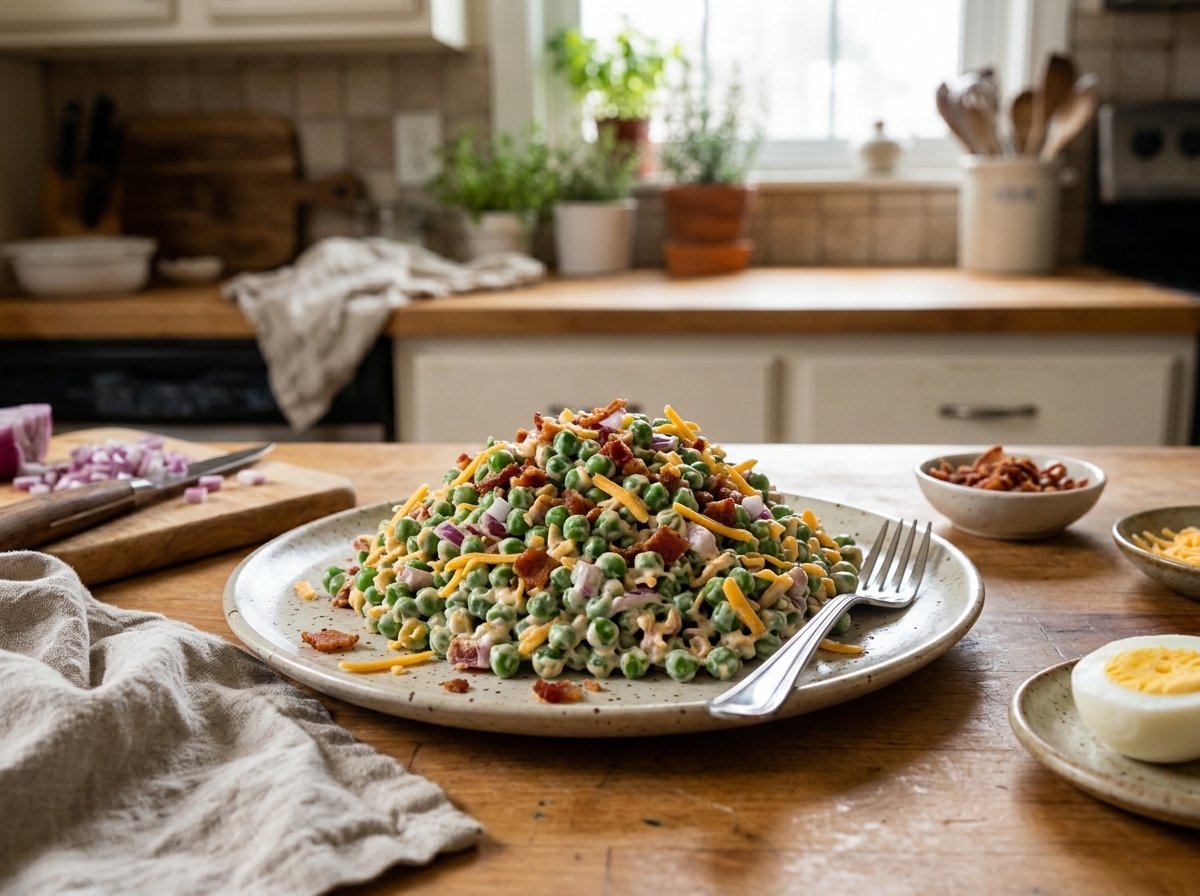
High Protein Creamy Bacon Pea Salad
This creamy bacon pea salad combines sweet frozen peas, crispy bacon, shredded cheddar cheese, and diced red onion with a tangy sour cream and mayonnaise dressing.
10
minutes2
hours2234
kcal2
hours10
minutesIngredients
- For the Dressing
½ cup sour cream
⅓ cup mayonnaise
1 tablespoon sugar
2 teaspoons apple cider vinegar
½ teaspoon salt
½ teaspoon black pepper
- For the Salad
4 cups frozen peas, thawed
8–10 strips bacon, cooked and crumbled
½ cup shredded cheddar cheese
½ red onion, diced
Directions
- Prepare the Dressing
Add the sour cream, mayonnaise, sugar, apple cider vinegar, salt, and black pepper to a small mixing bowl. Stir until smooth and creamy. Cover the bowl and refrigerate the dressing while you prepare the salad ingredients. - Prepare the Salad Ingredients
Thaw the frozen peas completely and drain away any excess moisture. Cook the bacon until crisp, allow it to cool, and crumble it into small pieces. Dice the red onion and shred the cheddar cheese if it is not already prepared. - Combine the Ingredients
Place the thawed peas, crumbled bacon, shredded cheddar cheese, and diced red onion in a large mixing bowl. Toss gently until the ingredients are evenly distributed throughout the salad. - Add the Dressing
Pour the prepared dressing over the pea mixture. Gently toss until all the ingredients are coated with the creamy dressing. Check the bottom of the bowl to ensure the dressing is distributed evenly. - Chill and Serve
Cover the salad and refrigerate for 2–3 hours. Serve cold as a side dish with grilled chicken, fish, burgers, roasted meats, or other favorite main courses.
Nutrition Facts
- Calories: 2234kcal
- Fat: 170g
- Carbohydrates: 108g
- Fiber: 31g
- Sugar: 52g
- Protein: 72g
