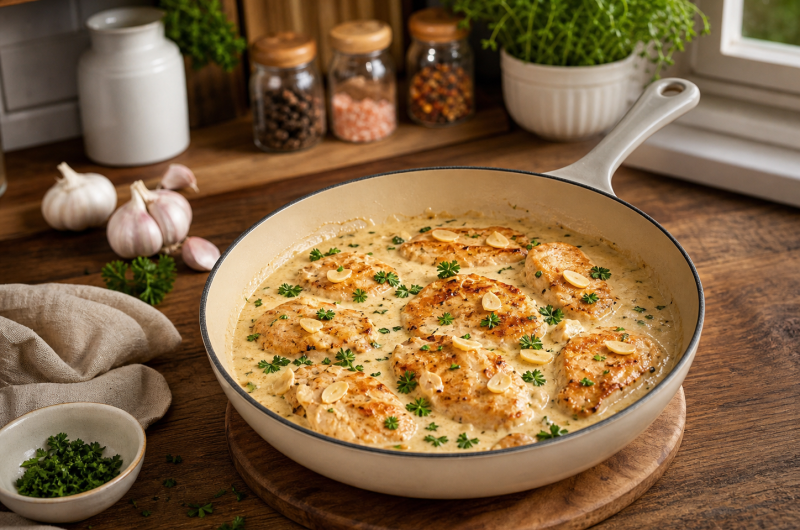

This creamy garlic chicken recipe is a simple way to turn boneless chicken thighs into a rich and satisfying dinner. The chicken is pan-seared until golden, then served with a smooth garlic cream sauce made from butter, chicken broth, white cooking wine, heavy cream, and plenty of fresh garlic. The whole dish comes together in about 25 minutes, making it useful for busy weeknights.
Why This Chicken Recipe Works
The best part of this creamy chicken recipe is the sauce. It has a strong garlic flavor without needing a long list of ingredients, while the reduced broth and white cooking wine add depth. Heavy cream gives the sauce a silky texture that coats the chicken nicely. Since the chicken is cooked in a skillet, the browned pieces left behind also add extra flavor to the finished sauce.
A Quick Weeknight Chicken Dinner
When you need an easy chicken dinner, this recipe keeps things straightforward. The chicken only needs salt, black pepper, and smoked paprika before it goes into the skillet. While it cooks, you can prepare the ingredients for the garlic cream sauce. Once the chicken is browned and cooked through, the sauce can be finished in the same pan, which means fewer dishes to wash.
Strong Garlic Flavor
If you enjoy garlic chicken, this recipe gives it a central place rather than using it as a small seasoning. Six cloves are thinly sliced and gently cooked in butter until fragrant. The important thing is to keep the heat low and avoid letting the garlic become deeply brown. Burned or heavily browned garlic can make the sauce taste bitter, so gentle cooking gives you a cleaner garlic flavor.
Chicken Thighs Give You Juicy Results
Boneless skinless chicken thighs are a good choice because they stay tender while being seared in a skillet. They also have enough natural richness to work well with a creamy sauce. Chicken breasts can be used if that is what you have available, but they cook differently and can become dry if left over high heat for too long. Adjust the cooking time according to the size and thickness of the chicken.
Seasoning the Chicken
The chicken is seasoned with sea salt, black pepper, and smoked paprika before cooking. This simple combination adds enough flavor without competing with the garlic cream sauce. Pat the chicken dry with paper towels before seasoning so excess moisture does not interfere with browning. A dry surface helps the chicken develop a better golden exterior when it hits the hot olive oil.
Choosing the Cooking Oil
Olive oil is used for searing the chicken because it works well over medium-high heat and adds a mild flavor. Avocado oil can also be used as an alternative if preferred, although the original recipe uses olive oil. Make sure the skillet is properly heated before adding the chicken. Starting with a hot pan helps the chicken brown instead of simply releasing moisture and steaming.
The Importance of a Good Sear
Give the chicken enough room in the skillet so each piece can make good contact with the cooking surface. If the pan is crowded, cook the chicken in batches instead. Crowding lowers the temperature of the pan and can prevent the chicken from developing a golden exterior. Let each side cook without constantly moving the chicken, turning it only when it is ready to flip.
How to Know the Chicken Is Done
Chicken thighs should be cooked through before they are returned to the sauce. A meat thermometer is the easiest way to check the internal temperature accurately. For chicken thighs, the original recipe recommends about 170°F for a juicy result. If you substitute chicken breasts, aim for 165°F. Thicker pieces may need additional cooking time, while smaller pieces can finish more quickly.
Making the Garlic Butter Base
After the chicken is removed from the skillet, lower the heat before adding the butter. Once it melts, add the thinly sliced garlic and stir it frequently. The goal is to soften and perfume the garlic rather than brown it heavily. Cooking it for about one to two minutes is enough to release its flavor. This step forms the foundation of the creamy garlic sauce.
Deglazing the Skillet
Chicken leaves behind browned bits in the bottom of the pan, and those bits can add a lot of flavor to the sauce. Add the reduced-sodium chicken broth and white cooking wine, then use a wooden spoon to loosen the browned pieces from the skillet. This process is called deglazing. Stirring everything together allows those flavorful pieces to become part of the sauce instead of being left behind in the pan.
Why Reduced-Sodium Broth Helps
Reduced-sodium chicken broth is recommended because the liquid is simmered and reduced before the cream is added. As water evaporates, the flavors become more concentrated. Regular broth may make the finished sauce too salty, especially when combined with seasoned chicken. You can also use homemade chicken broth or bone broth if preferred, but keep in mind that different broths can vary in saltiness.
Adding White Cooking Wine
White cooking wine gives the sauce more depth and a slight tang that balances the richness of the cream. Once the broth and wine are added, the liquid is simmered so some of the moisture evaporates. This reduction creates a more concentrated base before the heavy cream goes into the pan. If you do not want the tang from the wine, the original recipe allows it to be replaced with additional broth.
Reducing the Sauce
The broth and wine mixture should simmer until its volume has reduced by about half. This takes roughly 10 minutes in the recipe card. Reduction is important because it concentrates the flavor before the heavy cream is added. Keep the heat controlled rather than boiling the liquid aggressively. A steady simmer gives you more control and helps prevent the sauce from reducing too quickly.
Making the Sauce Creamy
Once the liquid has reduced, turn the heat down to low and add the heavy cream. The cream only needs a few minutes to warm through. Avoid bringing the cream sauce to a boil because high heat can affect its texture. The finished sauce should be smooth, creamy, and loose enough to spoon over the chicken. It will also cling to the chicken as you serve it.
Keeping the Sauce From Becoming Watery
Heavy cream is important for the texture of this particular recipe. Regular milk, half-and-half, or thinner alternative milks are not recommended because they can produce a watery sauce. If you need a dairy-free version, full-fat coconut milk can be used according to the original substitution guidance. Keep in mind that coconut milk will change the flavor slightly.
Adding the Chicken Back
Remove the bay leaf before returning the cooked chicken to the skillet. Place the chicken into the warm sauce and spoon the creamy garlic mixture over each piece. Letting the chicken sit in the sauce briefly allows the flavors to come together without requiring another long cooking period. The result is tender chicken surrounded by a rich, garlicky sauce that is ready to serve.
Optional Serving Ideas
This creamy garlic chicken can be served on its own or paired with simple low-carb sides. Steamed vegetables, roasted broccoli, cauliflower rice, or zucchini noodles can work well with the sauce. If serving the chicken with pasta or zucchini noodles, the original recipe recommends doubling the sauce ingredients so there is enough creamy garlic sauce to coat the noodles as well.
Doubling the Sauce for Noodles
If you want extra sauce, double the butter, garlic, chicken broth, white cooking wine, heavy cream, and bay leaf. This gives you enough sauce to spoon over chicken and use with pasta or zucchini noodles. The original recipe specifically recommends doubling the sauce ingredients when serving it this way. Keeping the chicken quantity the same allows the extra sauce to function as a topping or coating.
Preventing Bitter Garlic
The most important cooking detail is avoiding heavily browned garlic. Garlic can become bitter when it is cooked too aggressively, which can affect the entire sauce. Keep the skillet on low heat after adding the butter and garlic, and stir often. The garlic should become fragrant and lightly softened rather than dark brown. If it starts browning quickly, lower the heat immediately.
Avoiding an Overcrowded Skillet
A crowded skillet is another common problem when cooking chicken thighs. When too many pieces are packed together, moisture collects in the pan and makes browning more difficult. Arrange the chicken in one layer with some space around each piece. If your skillet is not large enough, sear the chicken in batches. This takes a little longer but gives you a better crust and more even cooking.
Adjusting the Heat
The chicken should brown without burning on the outside before it is fully cooked inside. If the chicken becomes golden too quickly, lower the heat and continue cooking until it reaches the proper internal temperature. Cooking at a slightly lower temperature is better than allowing the outside to burn while the center remains undercooked. The same principle applies when preparing thicker chicken pieces.
What Happens Without the Cream
If you leave out the heavy cream, the sauce will naturally be thinner. The original recipe recommends shortening the simmering time in this case so you do not lose too much liquid. You will still have a garlicky broth-based sauce, but it will not have the same creamy texture. For the closest version of the original dish, use the listed heavy cream.
Storing Leftover Chicken
Leftover creamy garlic chicken can be stored in an airtight container in the refrigerator for up to three to four days. The sauce may become firm or solid when chilled, which is normal because of the cream and butter. It will loosen again as it warms. Store the chicken and sauce together so the meat stays coated and can absorb some of the sauce while refrigerated.
Reheating the Chicken
Cream-based sauces are best reheated slowly because sudden high heat can cause the sauce to separate. Warm the chicken over medium-low to low heat, stirring the sauce gently as it heats. Avoid bringing the sauce to a rapid boil. If the sauce appears thicker after refrigeration, gentle heating will gradually restore a smoother consistency without stressing the cream.
Meal Prep Approach
For meal preparation, you can season and sear the chicken ahead of time. The sauce is best prepared fresh when possible because creamy sauces generally have a better texture immediately after cooking. If you prepare the chicken in advance, refrigerate it properly and make sure it is reheated thoroughly before serving. Preparing the sauce separately can also make reheating easier.
Is Creamy Garlic Chicken Keto?
This recipe fits well into a keto meal plan because the listed nutrition provides only 2 grams of total carbohydrates and 1.9 grams of net carbohydrates per serving. The combination of chicken thighs, heavy cream, butter, and olive oil provides a filling meal with very few carbohydrates. However, the exact nutrition can vary depending on the brands of broth, wine, cream, and other ingredients used.
Protein in Creamy Garlic Chicken
Chicken thighs make this a protein-rich dinner option, with the listed nutrition providing 23.2 grams of protein per serving. Protein helps make the meal satisfying, while the creamy sauce adds richness without requiring a large number of additional ingredients. Serving the chicken with a low-carbohydrate vegetable side can create a balanced dinner while keeping the overall meal relatively low in carbohydrates.
A Simple Skillet Dinner
One reason this recipe is practical is that the chicken and sauce are prepared in the same skillet. The chicken is first browned, then removed while the sauce is built using the flavorful bits left in the pan. This method keeps the cooking process organized and allows the sauce to pick up the savory flavor from the chicken. It also makes cleanup easier than preparing separate pans for the meat and sauce.
Garlic Chicken for Guests
Although the recipe is quick enough for a weeknight, the creamy sauce also makes it suitable for serving guests. The golden chicken looks appealing when spooned with the pale garlic cream sauce, and the preparation does not require complicated cooking techniques. A little fresh parsley can be added before serving for color, although it is optional and not part of the original ingredient list.
Simple Ingredient Swaps
The recipe offers several practical substitutions while keeping its basic character intact. Boneless skinless chicken breasts can replace thighs, avocado oil can replace olive oil, and regular smoked paprika can be used if that is what you have. White cooking wine can be replaced with additional chicken broth, while full-fat coconut milk can replace heavy cream for a dairy-free variation.
Serving the Finished Chicken
Serve the creamy garlic chicken while the sauce is warm and smooth. Spoon plenty of sauce over the chicken so each piece gets the garlic and cream mixture. A small amount of fresh parsley can be added if desired. For a simple meal, pair it with vegetables or another low-carb side. The sauce is especially useful for adding flavor to mild vegetables such as cauliflower or zucchini.
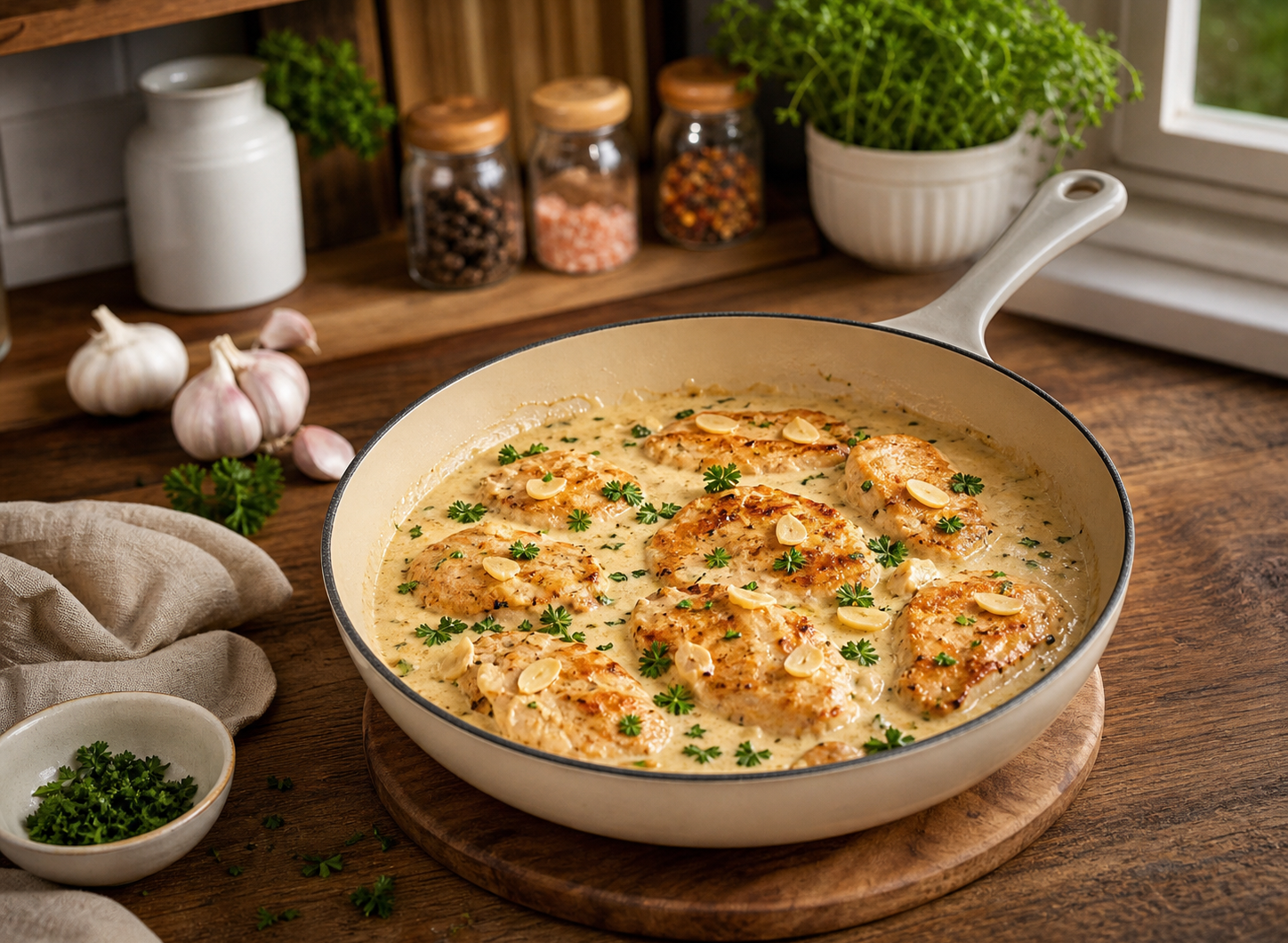
Creamy Garlic Butter Chicken (Keto-Friendly)
This easy skillet chicken dinner takes just 25 minutes and works well for a quick weeknight meal or a simple dinner for guests.
4
servings5
minutes20
minutes253
kcal1.9
g25
minutesIngredients
1 1/2 lb boneless skinless chicken thighs, about 6 medium
1 tsp sea salt
1/4 tsp black pepper
1/4 tsp smoked paprika
1 tbsp olive oil
1 tbsp unsalted butter
6 cloves garlic, peeled and thinly sliced
3/4 cup reduced-sodium chicken broth
1/2 cup white cooking wine
1 medium bay leaf
1/2 cup heavy cream
Directions
- Pat the chicken thighs dry with paper towels. Season both sides evenly with sea salt, black pepper, and smoked paprika.
- Heat the olive oil in a 12-inch skillet over medium-high heat. Arrange the chicken in a single layer and cook for 5 to 7 minutes per side, without moving except to flip. Cook in batches if necessary. Remove the chicken once browned and cooked through, cover loosely with foil, and set aside.
- Reduce the heat to low and add the unsalted butter to the skillet. Once melted, add the sliced garlic. Cook for 1 to 2 minutes, stirring often, until fragrant. Do not let the garlic become heavily browned because it can make the sauce bitter.
- Pour the chicken broth and white cooking wine into the skillet. Scrape the browned bits from the bottom with a wooden spoon. Add the bay leaf and bring the liquid to a gentle boil. Reduce the heat and simmer for about 10 minutes, or until the liquid has reduced by half.
- Lower the heat and pour in the heavy cream. Warm the sauce for a few minutes, but do not allow it to boil. Remove the bay leaf once the sauce is warm and creamy.
- Return the cooked chicken thighs to the skillet. Spoon the creamy garlic sauce over the chicken and serve while hot.
Notes
- Keep the garlic over low heat so it becomes fragrant without turning dark brown.
- Avoid crowding the skillet; cook the chicken in batches when necessary.
- For chicken thighs, use a meat thermometer and aim for about 170°F internally. If using chicken breasts, aim for 165°F.
- If the chicken browns before it is fully cooked, lower the heat and continue cooking.
- For pasta or zucchini noodles, double the butter, garlic, broth, white cooking wine, heavy cream, and bay leaf to make extra sauce.
- Store leftovers in an airtight container for 3 to 4 days and reheat gently over medium-low to low heat. Freezing is not recommended because the cream sauce may lose its texture.
Nutrition Facts
- Total number of serves: 1
- Calories: 253kcal
- Fat: 16.2g
- Carbohydrates: 2g
- Fiber: 0.1g
- Sugar: 0.7g
- Protein: 23.2g

)