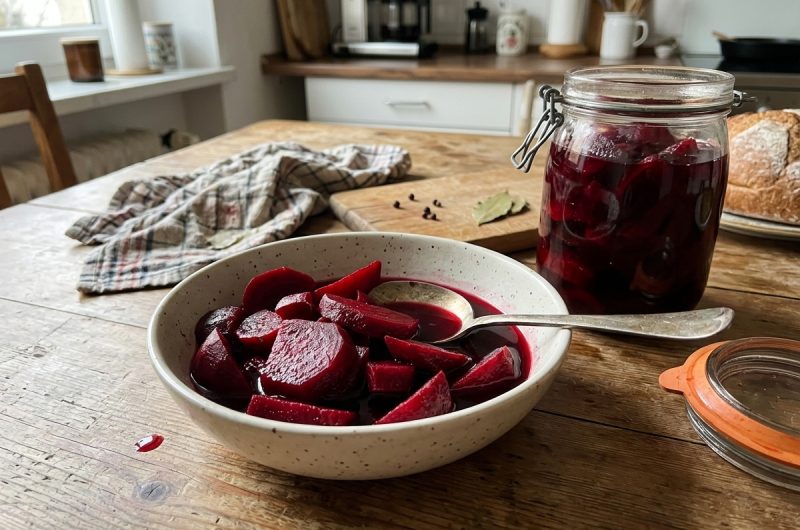

Homemade pickled beets are a delicious way to preserve fresh beets and enjoy their naturally sweet, earthy flavor throughout the year. This traditional pickled beet recipe combines tender beets with white vinegar, sugar, pickling salt, and ground cloves to create a balanced sweet-and-tangy flavor.
The beets develop a beautiful deep red color, while the lightly spiced brine adds flavor without making them overly hot or strong. Whether you serve them alongside everyday meals or add them to salads and sandwiches, these homemade pickled beets are a versatile addition to your kitchen.
Making pickled beets at home allows you to control the ingredients and prepare a batch that suits your family’s taste. The process involves cooking fresh beets until tender, peeling and slicing them, preparing a vinegar-based brine, and packing everything into jars.
The final water-bath processing step is important when preparing shelf-stable canned beets, so it is essential to follow tested canning guidance for safe storage. Although the recipe requires some time, much of it involves cooking, cooling, and allowing the jars to rest rather than active preparation.
Why You Will Love This Pickled Beets Recipe
A Sweet and Tangy Flavor
One of the best things about homemade pickled beets is the combination of sweetness and acidity. White vinegar gives the brine its familiar tangy taste, while white sugar balances the sharpness and complements the natural sweetness of the beets.
Ground cloves contribute a gentle warming aroma that makes the flavor more interesting without overpowering the vegetables. The result is a traditional sweet pickled beet flavor that works well with a wide variety of meals.
A Beautiful Natural Color
Beets are known for their deep red and purple shades, which become especially attractive when the slices are packed into clear jars with their colorful brine. The vinegar mixture helps preserve the distinctive appearance of the cooked beets, making them appealing enough to serve directly at the table. Their rich color also adds contrast to salads, sandwiches, grain bowls, and vegetable platters. Arranging the slices neatly in jars makes the finished batch look inviting and easy to use.
A Practical Way to Prepare a Large Batch
This recipe uses five pounds of beets and produces approximately six 16-ounce jars according to the original yield. Preparing a larger quantity at once can be convenient when fresh beets are available in abundance. Instead of cooking a small portion every time you want a tangy vegetable side, you can prepare a batch for different meals. Remember that shelf-stable storage depends on using a validated canning method, appropriate jars, and correct processing instructions for your location and altitude.
Simple Pantry Ingredients
You do not need a long list of specialty ingredients to make this classic recipe. Fresh beets, white vinegar, white sugar, pickling salt, and ground cloves provide the main flavors. Each ingredient serves a purpose: the beets form the base, vinegar supplies acidity, sugar creates sweetness, salt contributes seasoning, and cloves add a subtle spice note. Measuring everything before beginning helps the cooking process run smoothly and reduces the chance of overlooking an ingredient.
Tips for Better Homemade Pickled Beets
Choose Beets That Cook Evenly
Using beets of similar size makes it easier to achieve consistent tenderness. If the batch contains a mixture of small and large beets, check them individually and remove each one when it is ready. This prevents smaller beets from becoming too soft while larger ones finish cooking. Fresh, firm beets also tend to produce a better texture after slicing. Trim away the stems as directed, and remove dirt thoroughly before cooking so that the finished vegetables have a clean flavor.
Slice the Beets Neatly
Even slices are easier to pack and serve than irregular chunks. You can cut the cooked beets into rounds or other practical shapes, provided the preparation remains consistent with the tested recipe. Try to avoid making the pieces extremely thin, as they may become fragile during handling. Slightly thicker slices generally hold their shape better and are convenient for serving alongside meals. Use a sharp knife and allow the beets to cool enough to handle safely before cutting.
Measure the Brine Ingredients Carefully
The balance of vinegar, sugar, salt, and spices determines the final flavor of the pickled beets. Accurate measuring helps the recipe turn out consistently from one batch to the next. Avoid estimating ingredients by eye, especially when preparing jars intended for pantry storage. Do not reduce the vinegar or replace it with a weaker acidic ingredient unless the change is specifically permitted by a tested preservation recipe. A carefully prepared brine gives the beets their characteristic sweet, tangy taste.
Keep Jar Rims Clean
A clean rim helps the lid make proper contact with the jar. Even small pieces of beet, sugar residue, or drops of brine can interfere with the sealing surface. After filling the jars, inspect each rim and wipe it carefully with a clean, damp paper towel. Follow the lid manufacturer’s instructions when applying lids and bands, since different canning systems may have different requirements. Clean handling also makes the finished jars more attractive and reduces mess during the filling process.
How to Serve Pickled Beets
Serve Them as a Side Dish
Pickled beets are an easy side dish for lunch or dinner. Their sweet, tangy flavor pairs well with roasted vegetables, potatoes, rice, beans, and many savory main courses. Serve a small portion beside grilled chicken, roasted meat, or a hearty vegetarian meal to add a refreshing contrast. Because their flavor is pronounced, a modest serving is often enough to complement the rest of the plate without overwhelming it. Drain the slices before serving if you prefer less liquid on the plate.
Add Them to Salads
These beets can add color, texture, and acidity to a variety of salads. Combine sliced pickled beets with leafy greens, cucumber, onion, or other vegetables for a simple lunch. They can also be paired with ingredients that offer a creamy or mild contrast. Their vibrant color makes an ordinary salad look more inviting, while their sweet-and-sour flavor helps balance rich dressings and other savory ingredients. Add them shortly before serving if you want the other salad ingredients to retain their original colors.
Use Them in Sandwiches and Grain Bowls
Thinly sliced pickled beets can bring a tangy element to sandwiches and wraps. They work especially well with greens, cheese, and other ingredients that complement their earthy flavor. You can also add drained slices to grain bowls containing rice, quinoa, beans, or roasted vegetables. The acidity helps brighten a meal made with hearty ingredients, while the vivid color adds visual appeal. Start with a small amount and adjust according to your preference so that the beets complement rather than dominate the dish.
How to Store Homemade Pickled Beets
Storage for Properly Canned Jars
For jars intended to be shelf-stable, use a tested recipe and follow its full canning procedure, including the correct processing time and altitude adjustments. Store properly processed, sealed jars in a cool, dry, dark location, away from direct sunlight and temperature changes. Remove the screw bands for storage if recommended by the preservation authority, and keep the lids and jars clean and dry. Label each jar with the preparation date so you can keep track of your batch. Never taste beets from a jar that is leaking, bulging, damaged, or showing other signs of spoilage.
What to Do if a Jar Does Not Seal
If a jar fails to seal after cooling, do not store it at room temperature. Refrigerate it promptly and use the contents within a safe period recommended by a trusted food-safety authority, or follow an approved procedure for reprocessing if the recipe and timing permit. Check for food residue on the rim, damaged jars, or lid problems before preparing another batch. Do not assume that tightening the ring or pressing the lid down will make an unsealed jar safe for pantry storage.
Refrigeration After Opening
Once a jar has been opened, keep it refrigerated and use clean utensils to remove the beets. Keep the remaining slices covered by the brine when possible, and close the jar securely after each use. Follow reliable food-safety guidance for the recommended refrigerated storage period. If the contents develop an unusual smell, visible mold, unexpected changes, or other signs of spoilage, discard them without tasting. Proper refrigeration and careful handling help maintain the flavor and quality of the beets after opening.
Frequently Asked Questions About Pickled Beets
What Do Homemade Pickled Beets Taste Like?
Homemade pickled beets have an earthy, naturally sweet flavor balanced by the sharp acidity of vinegar. In this recipe, white sugar softens the tanginess, while ground cloves add a subtle warming note. The flavor is not intended to be hot or heavily spiced. Instead, the ingredients work together to create a traditional sweet-and-tangy pickle that can be served with a variety of everyday meals.
Can I Use Different Sizes of Beets?
Yes, beets of different sizes can be used, but their cooking times may vary. Smaller beets often become tender faster, while larger ones may require additional cooking. Check each beet individually and remove it from the pot when it reaches the desired tenderness. Cooking them appropriately helps preserve a pleasant texture and makes peeling and slicing easier.
Why Is Beet Cooking Water Used in the Brine?
The recipe reserves one cup of beet cooking water to incorporate into the brine. This liquid carries some of the beets’ natural color and can contribute to the appearance of the finished pickle. It is combined with vinegar, sugar, pickling salt, and cloves to form the liquid poured over the sliced beets. Use the quantity specified in the recipe rather than adding extra water or changing the vinegar balance.
How Long Does It Take to Make Pickled Beets?
The original recipe lists 45 minutes of preparation, 1 hour and 5 minutes of cooking, 12 hours and 10 minutes of additional time, and a total of 14 hours. The additional time includes cooling and resting, so the process does not require continuous attention for the entire period. Actual timing can vary with beet size, equipment, and the tested canning method you follow.
Can I Change the Amount of Vinegar or Sugar?
For this recipe, keep the original ingredient quantities unchanged. Vinegar is especially important when preparing pickled beets for shelf-stable storage, because acidity is part of the food-preservation process. Changes to the vinegar amount or concentration can make a recipe unsafe for canning. If you want a different sweetness level, choose a tested recipe that specifically permits the adjustment rather than improvising with a shelf-stable batch.
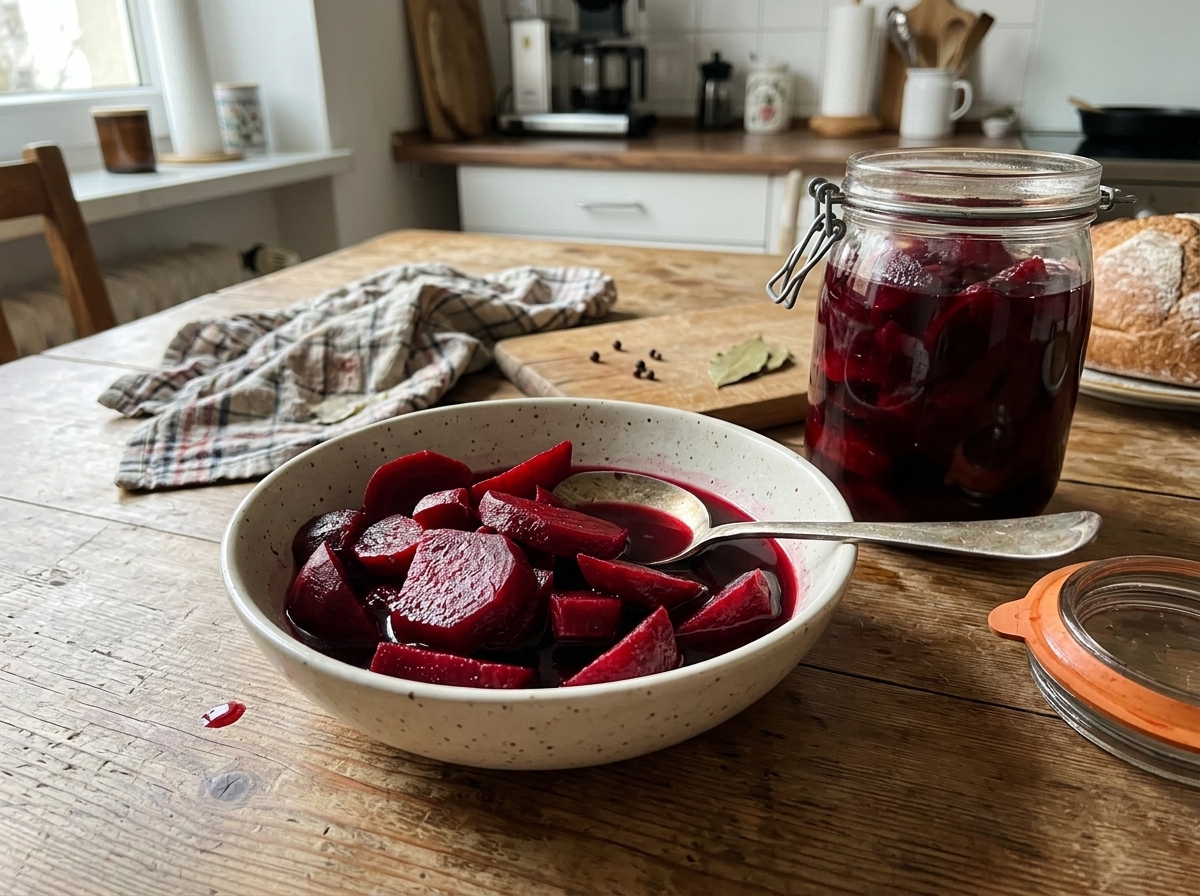
Healthy Homemade Pickled Beetroot Recipe
These homemade pickled beets feature tender slices of fresh beets preserved in a sweet-and-tangy vinegar brine with pickling salt and ground cloves.
24
servings45
minutes1
hour5
minutes424
kcal730
13
hours55
minutesIngredients
5 pounds beets, stems removed
4 cups white vinegar
2 cups white sugar
1 ½ teaspoons pickling salt
½ teaspoon ground cloves
Directions
- Place the beets in a large pot and cover them with water. Bring to a boil, reduce the heat, and cook until tender, approximately 20 to 25 minutes depending on size.
- Inspect the canning jars for cracks and the rings for rust or damage. Prepare the jars and lids according to the requirements of a tested canning procedure.
- Drain the cooked beets, reserving 1 cup of beet cooking water. Let them cool for 10 to 15 minutes, then peel and slice.
- Pack the sliced beets into the prepared hot jars, leaving the headspace specified by the tested recipe.
- Strain the reserved beet water into a saucepan. Add the white vinegar, sugar, pickling salt, and ground cloves. Bring the mixture to a rapid boil.
- Pour the hot brine over the beets. Remove air bubbles with a suitable utensil, check the required headspace, and wipe the jar rims clean. Apply the lids according to the manufacturer’s directions.
- Process the jars in a boiling-water canner using a tested recipe’s processing time and any required altitude adjustment. Do not assume that the original 30-minute instruction is appropriate for every location or jar size.
- Carefully remove the jars and allow them to cool undisturbed for 12 to 24 hours. Check the seals once the jars have cooled. Refrigerate any unsealed jars promptly and use them safely.
Nutrition Facts
- Calories: 424kcal
- Fat: 1g
- Carbohydrates: 103g
- Protein: 6g
