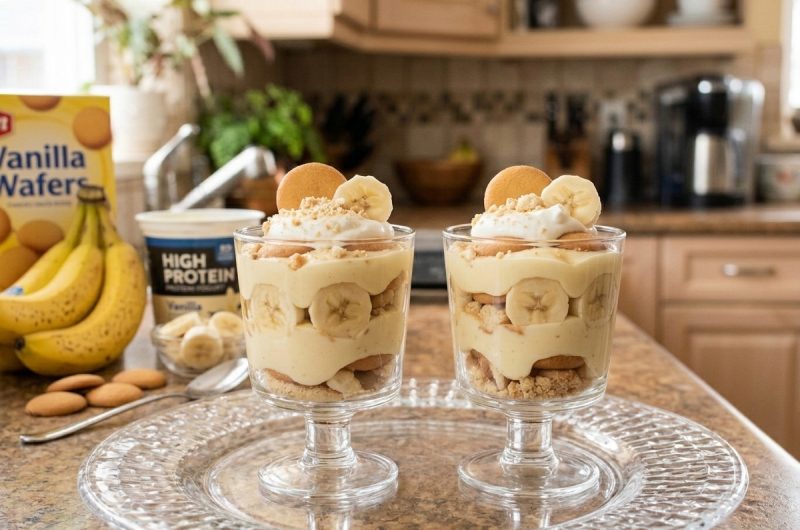

High-Protein Banana Pudding is a creamy, sweet, and refreshing dessert that brings together the natural flavor of ripe bananas, smooth yogurt, vanilla protein powder, and fluffy whipped topping. It offers the familiar comfort of classic banana pudding while adding a protein boost to every serving.
With layers of fresh banana slices and crunchy cookies, this dessert has a lovely combination of textures that makes each spoonful enjoyable. It is an excellent choice for summer gatherings, family desserts, or a sweet afternoon snack when you want something chilled and satisfying.
One of the best things about this banana pudding recipe is how simple it is to prepare. You do not need complicated cooking techniques, a long list of ingredients, or hours of active kitchen work. A blender brings the pudding ingredients together in just a few minutes, and the refrigerator takes care of the chilling process.
Once the mixture has thickened, you can fold it with whipped topping and arrange everything in individual serving glasses. The result is a dessert that looks inviting and tastes delicious without requiring much effort.
This high-protein banana pudding can also be made dairy-free and gluten-free by choosing suitable yogurt, whipped topping, protein powder, and cookies. These ingredient choices make the recipe useful for people who prefer to avoid certain ingredients while still enjoying a sweet treat.
Because the pudding is served cold, it is especially appealing during warmer months when rich baked desserts may feel too heavy. You can prepare it for a summer party, a weekend family meal, or a relaxed evening at home.
What Makes This Banana Pudding a High-Protein Dessert?
Traditional banana pudding usually contains milk, pudding mix, whipped topping, and layers of cookies. Although those ingredients create a delicious dessert, they do not always provide much protein per serving. This version includes vanilla protein powder and yogurt, giving the pudding a more protein-focused ingredient combination. The exact protein content will depend on the type of protein powder and yogurt you use, so checking their nutrition labels is the best way to estimate the amount in each portion.
Vanilla protein powder plays two important roles in this recipe. It adds protein while also bringing a pleasant vanilla flavor that complements the bananas. Four tablespoons are blended with the mashed bananas, yogurt, vanilla extract, tapioca starch, and salt.
Since different protein powders vary in sweetness, texture, and thickness, the finished pudding may taste slightly different depending on the brand you choose. A vanilla protein powder that mixes smoothly with liquids is a practical option for achieving a consistent texture.
Yogurt contributes creaminess and helps balance the sweetness of the bananas. Dairy-free coconut yogurt is used in the original recipe, but Greek yogurt can be substituted if dairy is suitable for your diet. Greek yogurt generally contains more protein than many coconut-based yogurts, although the exact amount varies by product. If you decide to make this substitution, remember that the flavor and thickness may change. The most suitable option depends on your dietary preferences and the texture you want in your homemade banana pudding.
Tips for the Best High-Protein Banana Pudding
Choose the Right Bananas
Select yellow bananas with a few brown speckles rather than fruit that is completely brown and very soft. Slightly spotted bananas provide sweetness while keeping the flavor fresh. Since the recipe uses bananas in both the pudding and the decorative layers, the quality of the fruit affects the overall taste and appearance. Use ripe but reasonably firm bananas for the slices, as they are easier to cut into neat coins and position along the sides of your glasses.
Let the Pudding Chill Fully
Four hours of refrigeration is part of the preparation, not an optional finishing step. The mixture needs this time to develop a more settled consistency before you fold in the whipped topping. If you are planning to serve the dessert after dinner, prepare the base earlier in the day. Giving the pudding enough time to chill also makes it easier to portion into glasses without the mixture spreading too quickly across the layers.
Fold Gently for a Creamy Texture
When combining the pudding with the whipped topping, use a spatula and gentle folding movements. Stirring too vigorously can reduce the lightness of the topping and create a denser texture. Fold from the bottom of the bowl toward the top, turning the mixture until the color and texture look even. Stop once there are no visible streaks. Gentle handling helps the finished dessert feel light while still delivering the creamy consistency expected from banana pudding.
Add Cookies Close to Serving Time
Cookies gradually absorb moisture from the pudding and whipped topping. If they sit in the refrigerator for too long after assembly, they will soften and may lose their crumbly texture. For the best contrast, prepare the pudding base ahead and add the banana slices and cookies shortly before serving. If you prefer softer cookies, you can assemble the glasses earlier, but keep in mind that the finished dessert will have a different texture after several hours in the refrigerator.
Ingredient Substitutions and Variations
Using Greek Yogurt Instead of Coconut Yogurt
If you eat dairy, plain Greek yogurt can replace the dairy-free coconut yogurt in this recipe. Greek yogurt often provides more protein and has a thicker consistency, which can make the pudding base feel firmer. It also has a tangier taste than many coconut yogurts, so the finished flavor may be slightly different. Choose a plain variety if you want the banana and vanilla flavors to remain prominent. Remember that this substitution means the dessert is no longer dairy-free.
Choosing Different Cookies
The original recipe uses gluten-free Mexican shortbread cookies, but other cookies can work if they suit your dietary needs. Regular shortbread, vanilla wafers, or animal crackers are alternatives when gluten is not a concern. Choose cookies with a mild flavor so they complement rather than overpower the banana and vanilla. If gluten-free preparation is important, check the package label instead of assuming that a particular cookie variety is suitable.
Selecting Protein Powder
Vanilla protein powder is recommended because it complements the other ingredients, but different brands have different flavor profiles. Some are sweeter, while others have a stronger vanilla taste or a slightly grainy texture. A powder that blends smoothly is usually the easiest option. Check the serving information on the package when estimating protein content, and make sure the product fits your dietary preferences. The recipe uses four tablespoons, so changing the amount may affect both the taste and consistency.
Alternatives to Tapioca Starch
The original recipe suggests all-purpose flour as an alternative when gluten sensitivity is not a concern. Cassava flour and arrowroot are also mentioned as possibilities, but these alternatives have not been tested in the source recipe. Their thickening behavior can differ, so the finished texture may not be identical. For the most predictable result, use tapioca starch as listed. If you need the recipe to remain gluten-free, avoid substituting ordinary wheat flour.
Frequently Asked Questions
Can High-Protein Banana Pudding Be Made Ahead?
Yes. The pudding mixture can be prepared in advance and kept in an airtight container in the refrigerator for up to three days, according to the original recipe. For the best texture, store the pudding base separately from the cookies and sliced bananas. Assemble the individual servings closer to the time you plan to eat them. This helps prevent the cookies from becoming soggy and keeps the banana garnish looking fresher.
Is Banana Pudding Better Served Cold or at Room Temperature?
This recipe is designed to be served chilled, making it especially refreshing on a warm day. You can allow a serving to sit briefly at room temperature if you prefer a softer texture, but extended time outside the refrigerator is not recommended for a dairy- or yogurt-based dessert. Keep the remaining portions refrigerated and serve only what you plan to eat. The chilled texture also helps the pudding hold its shape in individual glasses.
How Ripe Should the Bananas Be?
Yellow bananas with small brown speckles are the best choice for this recipe. They are sweet enough to provide a noticeable banana flavor but are usually firmer than very overripe fruit. Bananas with extensive brown patches and a very soft interior may taste stronger and make the mixture sweeter. Avoid green bananas because they tend to be firmer and less sweet. For the garnish, choose fruit that is ripe but still easy to slice neatly.
Can I Make This Recipe Dairy-Free and Gluten-Free?
Yes, the original ingredient list is designed around dairy-free coconut yogurt, dairy-free coconut whipped topping, and gluten-free Mexican shortbread cookies. You should also check the labels of your vanilla protein powder and other packaged ingredients to make sure they meet your requirements. Product formulations can differ by brand, so the label is more reliable than the product category alone. If you replace the coconut yogurt with Greek yogurt or use ordinary cookies, the dessert may no longer meet those dietary requirements.
How Should Leftovers Be Stored?
Keep leftover pudding in an airtight container in the refrigerator. The original recipe recommends storing the pudding base separately for up to three days, without the cookie crumbles and banana coins. If the dessert has already been assembled, the cookies will gradually soften and the banana slices may change color. For the best quality, prepare only the number of portions you need and add the toppings shortly before serving.
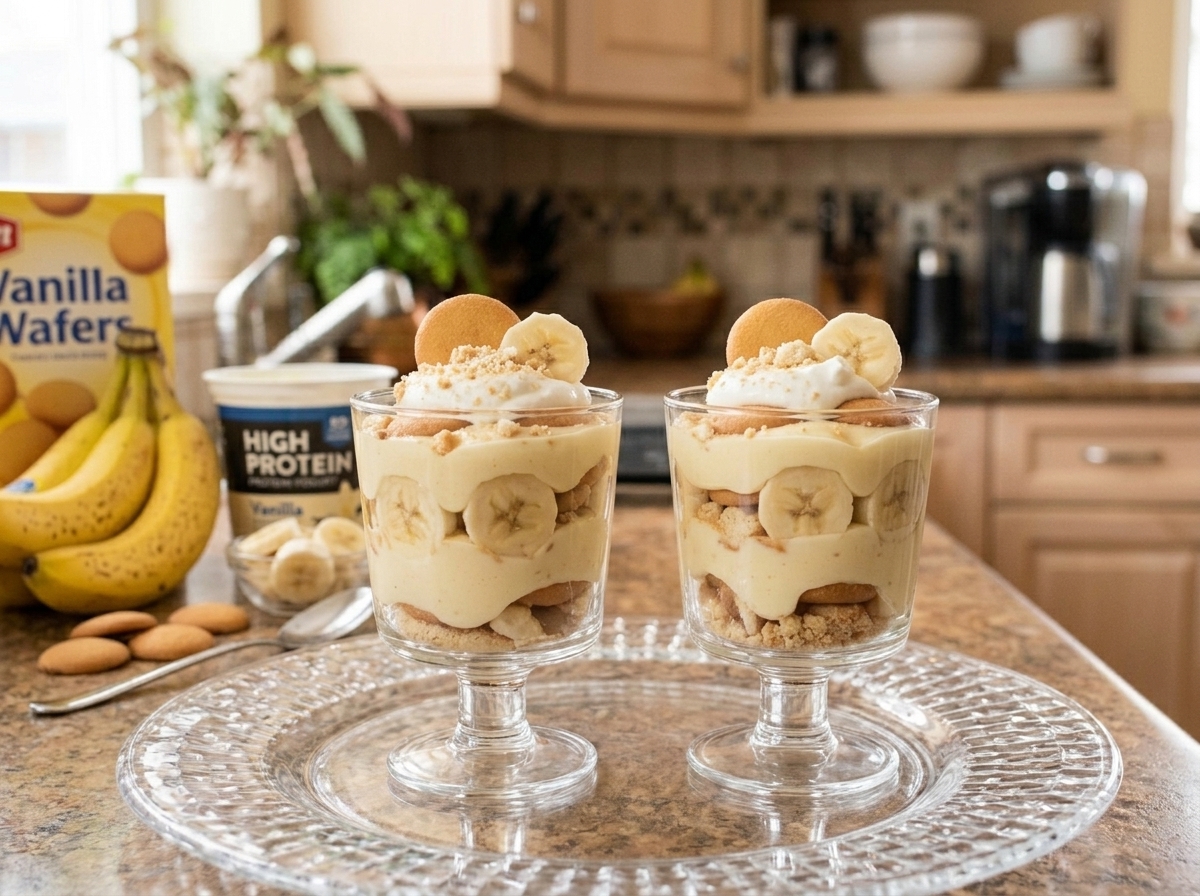
High Protein Banana Pudding Recipe
A creamy banana pudding made with ripe bananas, coconut yogurt, vanilla protein powder, and fluffy whipped topping.
6
servings15
minutes4
hours4
hours15
minutesIngredients
- For the Pudding
1 cup mashed ripe bananas (approximately 2 medium, spotted bananas, not overly ripe)
1 cup dairy-free coconut yogurt (or Greek yogurt if you can eat dairy)
2 teaspoons pure vanilla extract
4 tablespoons vanilla protein powder
1 tablespoon tapioca starch
Pinch of kosher salt
- For Assembly
1 (9-ounce) container dairy-free coconut whipped cream, thawed
24 gluten-free Mexican shortbread cookies
2 medium ripe bananas, cut into coins
Directions
- Blend the Pudding Base
Add the mashed bananas, coconut yogurt, vanilla extract, protein powder, tapioca starch, and kosher salt to a high-speed blender. Blend on low until combined, scrape down the sides, then gradually increase the speed and blend for about 30 seconds until slightly fluffy. - Chill the Mixture
Transfer the blended mixture to an airtight container and refrigerate for four hours. If the whipped topping is frozen, transfer it to the refrigerator to thaw during this time. - Fold in the Whipped Topping
Place one cup of the thawed whipped topping in a medium bowl. Gradually add the chilled banana mixture and gently fold with a rubber spatula until fully combined and no streaks remain. - Fill the Serving Glasses
Arrange six ramekins or short, clear glasses. Spoon a generous half cup of the pudding mixture into each glass. - Add Banana Slices and Cookies
Place five banana slices in each glass, positioning them near the sides so they remain visible. Crumble three cookies over each serving. - Finish the Dessert
Add a few generous tablespoons of the remaining whipped topping to each glass. Crumble one more cookie over the top and garnish with a banana coin. - Chill Before Serving
Refrigerate the assembled desserts until ready to serve. For the best texture, enjoy them on the day they are assembled.
