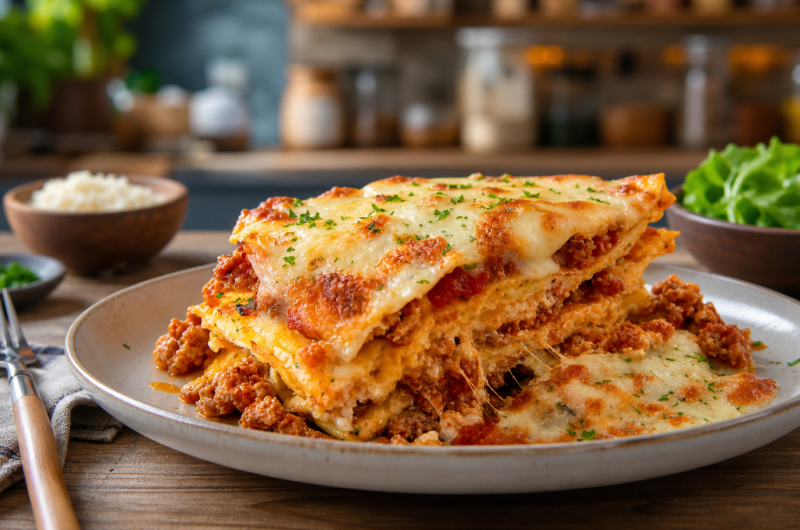

Anyone who has given up pasta for a low carb or keto lifestyle knows how much lasagna is missed. This recipe solves that problem by replacing traditional lasagna sheets with a baked cheese dough that acts as the noodle layer.
The result is a dish that still delivers layers of meat sauce, ricotta, and melted mozzarella, but without the wheat based pasta that usually makes lasagna a carb heavy meal. It is rich, filling, and works well for anyone tracking their carbohydrate intake.
What Makes This Recipe Different From Regular Lasagna
The biggest change in this recipe is the noodle itself. Instead of boiling pasta sheets, you bake a mixture of cream cheese, mozzarella, eggs, and Italian seasoning until it firms into a solid layer that can be sliced and stacked.
This cheese based noodle holds its shape surprisingly well once baked, giving you the structure needed to build a proper lasagna. Everything else, from the meat sauce to the ricotta and mozzarella layers, stays close to what you would expect from a traditional recipe.
Who Should Try This Low Carb Lasagna
This dish is a good fit for anyone following a ketogenic or low carb eating plan who still wants the comfort of a baked, layered pasta dish. It also works well for people who are simply trying to reduce their carbohydrate intake without giving up meals they enjoy.
Since it uses common ingredients like ground beef, marinara sauce, and mozzarella, it is also an easy recipe to introduce to family members who may not be following the same eating plan but still want to enjoy dinner together.
Understanding the Cheese Noodle Base
The cheese dough used in place of pasta noodles is made from just four ingredients: softened cream cheese, shredded part skim low moisture mozzarella, eggs, and Italian seasoning. When blended together, these create a thick batter that spreads easily into a baking pan.
Once baked, this mixture sets into a firm sheet with a texture close enough to pasta that it can be sliced into noodle sized pieces and layered just like you would with traditional lasagna sheets.
Mixing the Cheese Dough Properly
Getting a smooth, evenly blended cheese dough is easier with a food processor, since it breaks down the cheese and blends it thoroughly with the eggs and cream cheese. This creates a thick, liquid like batter that spreads smoothly across the baking pan.
If a food processor is not available, this step can still be done by hand, though it requires a bit more preparation to make sure the cheese blends properly into the mixture rather than sitting in clumps.
Baking the Cheese Layer
Once mixed, the cheese batter needs to be poured into a parchment lined 9×13 inch pan and spread out evenly using a spatula. Baking it at 350F for around twenty minutes allows it to firm up fully, and you will know it is ready when the surface no longer looks wet and feels solid when touched.
Letting this layer cool before handling it is important, since cutting into it while still warm can cause it to break apart instead of holding together as a noodle sheet.
Building the Meat Sauce Filling
While the cheese noodle layer cools, you can start on the meat sauce that fills the lasagna. This part of the recipe keeps things simple with minced onion, ground beef, no sugar added marinara sauce, and Italian seasoning.
Browning the beef and onion together first, then simmering everything with the sauce and seasoning, creates a flavorful filling that pairs naturally with the ricotta and mozzarella used in the layering process later on.
Selecting Ground Beef for This Recipe
The choice of ground beef affects both the taste and nutritional content of the finished lasagna. This recipe uses lean ground beef, which keeps the fat content more balanced while still providing plenty of flavor to the sauce. After browning the beef with the onion, draining off any excess fat helps prevent the finished lasagna from turning out greasy once all the layers are assembled and baked together.
Finding a Suitable Marinara Sauce
Since marinara sauce plays a big role in the overall flavor of this dish, choosing a version without added sugar helps keep the recipe aligned with low carb goals. Brands such as Muir Glen and Rao’s are known for offering marinara sauces without added sugars, making them convenient choices for this recipe. Homemade marinara sauce is also an option if you prefer to control exactly what goes into your sauce from start to finish.
Putting the Lasagna Together
With the cheese noodles cooled and the meat sauce ready, assembly can begin. This recipe uses an 8×4 inch loaf pan, which is smaller than a typical lasagna pan but works well with the sliced cheese noodles. Starting with a thin layer of meat sauce at the bottom, followed by a cheese noodle, more sauce, ricotta, and mozzarella, builds the same layered structure found in traditional lasagna, just on a smaller and more carb conscious scale.
Cutting the Cheese Noodles to Size
Before assembly, the cooled cheese dough needs to be sliced into three even pieces so each one fits neatly into the loaf pan. These slices function as your lasagna noodles throughout the dish. Taking care to cut them evenly makes the layering process smoother and helps the finished lasagna hold together better once it is baked and ready to be sliced for serving.
Layering Sauce, Ricotta, and Mozzarella
The layering process involves alternating between cheese noodles, meat sauce, ricotta cheese, and shredded mozzarella. A thin layer of sauce at the very bottom of the pan helps keep the first noodle from sticking, while each following layer of sauce, ricotta, and mozzarella adds more flavor and texture. Repeating this pattern through the second and third noodle layers results in a lasagna that is rich and cheesy throughout, not just on top.
Finishing the Bake
Once assembled, the lasagna returns to the oven at 350F for about twenty minutes so the layers can heat through completely and the cheese can melt into place. For those who like a bit of color on top, switching the oven to a low broil setting for the final two minutes allows the top layer of mozzarella to bubble and brown slightly, giving the finished dish a more traditional baked lasagna look.
Why Resting Time Matters
Letting the lasagna rest for a few minutes after baking is an important step that should not be skipped. This resting period allows the cheese and sauce to firm up slightly, which makes slicing much easier and helps each piece hold its shape on the plate. Cutting into the lasagna too soon after it comes out of the oven often results in layers sliding apart rather than staying neatly stacked.
Adding Fresh Herbs Before Serving
Once the lasagna has rested and been sliced, finishing it with fresh herbs adds a noticeable improvement in flavor. Finely chopped fresh basil, oregano, and parsley sprinkled on top bring a brightness that balances out the richness of the cheese and meat sauce. A light sprinkle of freshly grated parmesan cheese on top of each slice also adds an extra savory note that makes the dish feel more complete.
Making the Cheese Dough Without a Food Processor
If you do not have a food processor at home, this recipe can still be made by hand with a little extra effort. Start by whisking the softened cream cheese on its own until smooth, then whisk in the eggs until fully combined. From there, stir in the finely chopped mozzarella cheese along with the Italian seasoning, then pour the mixture into your prepared baking pan just as you would if using a food processor.
Choosing the Correct Mozzarella for Each Part
This recipe uses mozzarella cheese in two different ways, and the type you choose matters for each. For the cheese noodle dough, a low moisture, part skim mozzarella is necessary, since it has the right texture to firm up properly during baking. For the layers inside the lasagna, you have more freedom to use whichever mozzarella you prefer, since its main job there is simply to melt smoothly between the sauce and ricotta layers.
Notes for Best Results
This section answers a few common questions and offers practical guidance to help this low carb lasagna turn out well every time you make it.
Do I need a food processor for the cheese dough?
A food processor makes blending the cheese dough much easier, but it is not required. If mixing by hand, finely chop the shredded mozzarella first, whisk the cream cheese until smooth, then add the eggs and finally stir in the cheese and seasoning before pouring the batter into your pan.
Which marinara sauce works best for this recipe?
Choose a marinara sauce labeled as no sugar added to keep the recipe low carb friendly. Muir Glen and Rao’s are two brands known for offering this option, though making your own marinara sauce at home is also a reliable way to control the ingredients.
Can I substitute the ground beef?
The nutritional values for this recipe are based on 90/10 lean ground beef. You can substitute a different fat ratio if you prefer, but keep in mind that this will change the overall fat and calorie content of the finished lasagna.
Why does the noodle layer need low moisture mozzarella specifically?
Low moisture, part skim mozzarella is recommended for the cheese dough because its lower water content helps the noodle layer set firmly during baking. Using a higher moisture mozzarella in this part of the recipe may result in a softer noodle that is more difficult to slice and layer properly.
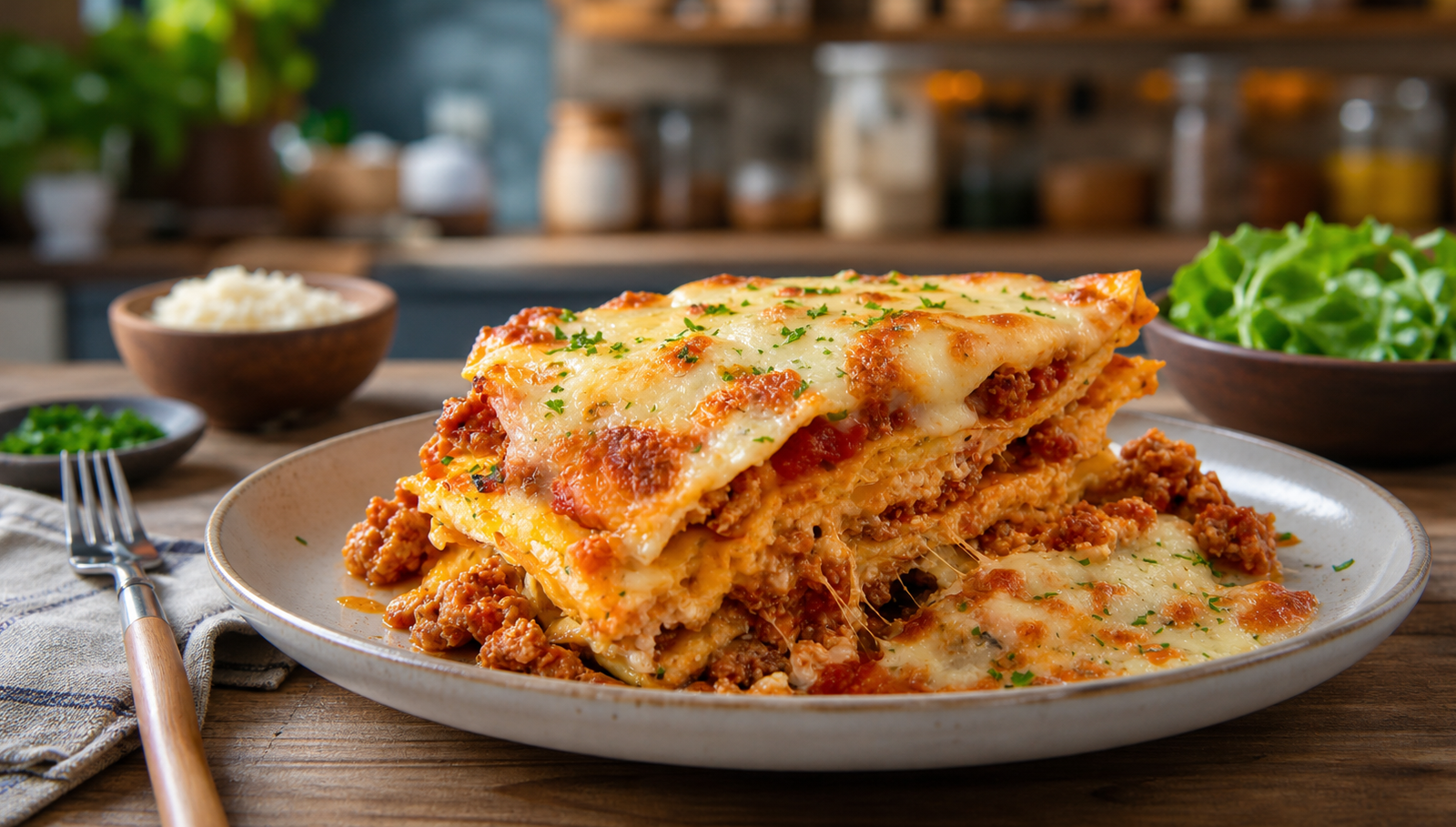
Keto/Low Carb Lasagna
A keto friendly lasagna that swaps traditional pasta sheets for a baked cheese dough noodle. Layered with seasoned ground beef, marinara sauce, ricotta, and mozzarella, this dish delivers classic lasagna flavor with far fewer carbs.
4
servings15
minutes50
minutes633
kcal8
g1
hour5
minutesIngredients
- Cheese Dough Lasagna Noodles:
Full fat cream cheese, softened – 4 oz
Shredded part skim low moisture mozzarella cheese – 1 1/2 cups
Large eggs – 2
Italian seasoning – 1 tsp
- Lasagna Filling:
Ground beef (lean ground beef recommended) – 1 lb
No sugar added marinara sauce – 1 cup
Italian seasoning – 1 tsp
Ricotta cheese – 6 tbsp
Shredded part skim low moisture mozzarella cheese – 1 cup
Onion, minced – 1/4 cup
Directions
- Preheat the oven to 350F and line a 9×13 inch baking pan with parchment paper.
- Combine all cheese dough ingredients in a food processor and blend until smooth and evenly mixed, forming a thick batter. If making by hand, follow the method described in the notes section.
- Pour the batter into the prepared pan and spread evenly using a spatula.
- Bake for about 20 minutes, until the surface is firm to the touch and no longer wet.
- Remove from the oven and let the cheese noodle layer cool completely.
- While it cools, cook the onion and ground beef together in a large skillet over medium heat until the meat is fully browned. Drain excess fat.
- Stir in the Italian seasoning and marinara sauce, then reduce heat and simmer for about 3 minutes.
- Slice the cooled cheese dough into three even pieces sized to fit an 8×4 inch loaf pan.
- Spread a thin layer of meat sauce on the bottom of the loaf pan and place the first cheese noodle on top.
- Add 1/3 of the remaining meat sauce, 3 tablespoons of ricotta, and 1/4 of the mozzarella cheese.
- Repeat with the second cheese noodle, meat sauce, ricotta, and mozzarella.
- Add the final cheese noodle, top with the remaining meat sauce, and sprinkle with the remaining mozzarella.
- Bake at 350F for about 20 minutes. For a browned top, switch to low broil for an additional 2 minutes after baking.
- Let the lasagna rest for a few minutes before slicing. Top with fresh basil, oregano, parsley, and grated parmesan if desired.
